Best E-Readers in 2026
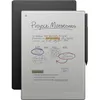
Best Large E-Reader: reMarkable Paper Pro
11.8" Gallery 3 color e-paper with adjustable front-light - the only large e-reader that combines both. Best-in-class writing feel for PDFs, textbooks, and sketching.$629 on reMarkable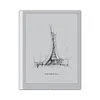
Best 10-Inch E-Reader: Boox Go 10.3 Gen II Lumi
10.3" Carta at 300 PPI, 364g, warm + cool front-light, Android 15 with Google Play. Sideload Kindle, Kobo, Libby - the lightest 10" front-lit reader.$450 on Amazon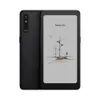
Best Pocket E-Reader: Boox Palma 2 Pro
Phone-sized 6.13" Kaleido 3 color reader running Android 15, with warm + cool front-light and a 5G SIM slot (data only - it can't place calls). Sideload Kindle, Kobo, Libby - the one-handed reader that also runs your apps.$400 on AmazonSpecialty Picks
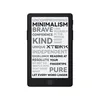
Best Mini E-Reader: Xteink X4 Pro
A 72g, 4.3" reader that finally adds a touchscreen and a warm + cool front-light - the two things the X3 and X4 went without. Static EPUB/TXT firmware, no apps: a book that's always on you rather than another screen to check. The touch layer is a little clunky and the software is nowhere near Kindle-polished, and it sells brand-direct only, in batches that go out of stock.$99 on Amazon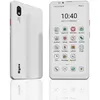
Furthest-Along E-Ink Phone: Bigme HiBreak Pro Color
The furthest anyone has pushed the e-ink phone: a real 5G Android handset that makes calls, with Google Play, dual SIM, and a 6.13" Kaleido 3 screen with warm + cool light. Go in eyes open - its US bands suit T-Mobile and Mint (not Verizon or AT&T), crashes and boot loops are documented, some units ship without Play certification, the screen is easily broken, and support is thin. An experiment worth running, not yet a daily driver.$520 on Amazon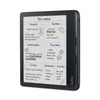
Best Color E-Reader: Kobo Libra Colour
7" Kaleido 3 color with physical page-turn buttons and IPX8 waterproofing. Libby is built in, so library books are one tap with no sideloading - the balanced color pick.$258 on AmazonScore | Brand | Model | Price | Size | Weight | PPI | Front-light | OS | Color | Screen Tech | Storage | RAM | Stylus | Page Buttons All | Audio | Cellular | Phone | Battery | Doc Transfer | Water | Released | Warranty |
|---|---|---|---|---|---|---|---|---|---|---|---|---|---|---|---|---|---|---|---|---|---|---|
82.0 | $160 9 | 7" 5 | 211g 7 | 300 10 | Warm + Cold 10 | Kindle OS 5 | B&W 8 | E Ink Carta 1300 10 | 16GB 10 | 5 | None 4 | No 5 | BT only 7 | 12wk 10 | Easy 10 | IPX8 10 | 2024-10-01 9 | 1 yr 6 | ||||
78.5 | $270 7 | 7" 5 | 195g 8 | 300 10 | Warm + Cold 10 | Android 13 8 | B&W 8 | E Ink Carta 1300 10 | 64GB 10 | 4GB 8 | InkSense (capacitive) 6 | Yes 9 | Speaker + BT 10 | 2wk 5 | Easy 10 | 4 | 2025-05-01 10 | 1 yr 6 | ||||
77.9 | $258 7 | 7" 5 | 199g 7 | 300 / 150 8 | Warm + Cold 10 | Kobo OS 5 | Kaleido 3 7 | Kaleido 3 7 | 32GB 10 | 5 | Kobo Stylus 2 8 | Yes 9 | BT only 7 | 5wk 7 | Easy 10 | IPX8 10 | 2024-04-01 9 | 1 yr 6 | ||||
77.5 | $99 10 | 4.3" 5 | 72g 10 | 219 8 | Warm + Cold 10 | Embedded (replaceable) 8 | B&W 8 | 5 | 16GB 10 | 5 | None 4 | Yes 9 | None 4 | None | None | 2wk 5 | Easy 10 | 4 | 2026-07-21 10 | 1 yr 6 | ||
76.7 | $220 7 | 7" 5 | 215g 7 | 300 / 150 8 | Warm + Cold 10 | Kindle OS 5 | Kaleido 3 7 | Kaleido 3 7 | 16GB 10 | 5 | None 4 | No 5 | BT only 7 | 8wk 9 | Easy 10 | IPX8 10 | 2025-01-01 10 | 1 yr 6 | ||||
76.5 | $350 6 | 6.13" 5 | 140g 9 | 300 / 150 10 | Warm + Cold 10 | Android 16 10 | Kaleido 3 7 | Kaleido 3 7 | 128GB 10 | 4GB 8 | None 4 | Yes 9 | BT only 7 | SIM | Data only | 6 | Easy 10 | 4 | 2025-12-04 10 | 1 yr 6 | ||
75.8 | $200 9 | 6" 5 | 160g 8 | 300 10 | Warm + Cold 10 | Android (older) 4 | B&W 8 | E Ink Carta 1300 10 | 32GB 10 | 3GB 6 | InkSense (capacitive) 6 | No 5 | BT only 7 | None | None | 4 | Easy 10 | 5 | 2026-06-07 10 | 1 yr 6 | ||
75.0 | 5 | 6.13" 5 | 195g 8 | 300 10 | Warm + Cold 10 | Android 16 10 | B&W 8 | 5 | 128GB 10 | 6GB 10 | 5 | Yes 9 | Speaker + BT 10 | None | None | 7 | Easy 10 | 5 | 7 | 1 yr 6 | ||
74.6 | $400 6 | 6.13" 5 | 175g 8 | 300 / 150 10 | Warm + Cold 10 | Android 15 10 | Kaleido 3 7 | Kaleido 3 7 | 128GB 10 | 8GB 10 | None 4 | Yes 9 | Speaker + BT 10 | Dual SIM | Data only | 1wk 3 | Easy 10 | 4 | 2025-11-14 10 | 1 yr 6 | ||
74.1 | $280 7 | 7" 5 | 195g 8 | 300 / 150 8 | Warm + Cold 10 | Android 13 8 | Kaleido 3 7 | Kaleido 3 7 | 64GB 10 | 4GB 8 | InkSense (capacitive) 6 | No 5 | BT only 7 | 2wk 5 | Easy 10 | 4 | 2025-09-01 10 | 1 yr 6 | ||||
73.8 | $100 10 | 3.97" 5 | 58g 10 | 235 9 | Warm + Cold 10 | Embedded firmware 1 | B&W 8 | 5 | 16GB 10 | 5 | None 4 | Yes 9 | None 4 | None | None | 4 | Easy 10 | 5 | 7 | 1 yr 6 | ||
73.4 | $280 7 | 6.13" 5 | 138g 9 | 300 10 | Cold only 6 | Android 16 10 | B&W 8 | E Ink Carta 1300 10 | 128GB 10 | 4GB 8 | None 4 | Yes 9 | BT only 7 | SIM | Data only | 6 | Easy 10 | 4 | 2025-11-01 10 | 1 yr 6 | ||
72.9 | $329 6 | 7" 5 | 215g 7 | 300 10 | Warm + Cold 10 | Android 14 9 | B&W 8 | E Ink Carta 1300 10 | 256GB 10 | 8GB 10 | 5 | Yes 9 | Speaker + BT 10 | SIM | Voice + data | 7 | Easy 10 | 5 | 7 | 1 yr 6 | ||
72.5 | $450 5 | 10.3" 5 | 364g 5 | 300 / 1337 10 | Warm + Cold 10 | Android 15 10 | B&W 8 | E Ink Carta 1200 8 | 64GB 10 | 4GB 8 | InkSense (capacitive) 6 | No 5 | Speaker + BT 10 | 3wk 5 | Easy 10 | 4 | 2026-03-01 10 | 1 yr 6 | ||||
72.4 | $279 7 | 5.84" 5 | 170g 8 | 300 / 150 10 | Warm + Cold 10 | Android 14 9 | Kaleido 3 7 | Kaleido 3 7 | 128GB 10 | 6GB 10 | None 4 | No 5 | Speaker + BT 10 | SIM | Voice + data | N/A 10 | Easy 10 | 4 | 2025-10-28 10 | 1 yr 6 | ||
72.0 | $249 7 | 6.13" 5 | 193g 8 | 300 / 150 10 | Warm + Cold 10 | Android 14 9 | Kaleido 3 7 | Kaleido 3 7 | 64GB 10 | 4GB 8 | InkSense (capacitive) 6 | No 5 | Speaker + BT 10 | Dual SIM | Voice + data | N/A 10 | Easy 10 | 4 | 2026-04-20 10 | 1 yr 6 | ||
71.4 | 5 | 5.84" 5 | 130g 9 | 300 10 | Warm + Cold 10 | Linux (custom) 5 | B&W 8 | E Ink Carta 1300 10 | 32GB 10 | 5 | None 4 | Yes 9 | BT only 7 | None | None | 4 | Easy 10 | 5 | 7 | 4 | ||
71.2 | $269 7 | 7.8" 5 | 265g 6 | 300 10 | Warm + Cold 10 | Android 14 9 | B&W 8 | E Ink Carta 1200 8 | 64GB 10 | 4GB 8 | InkSense (capacitive) 6 | No 5 | Speaker + BT 10 | 7 | Easy 10 | 4 | 2025-03-01 10 | 1 yr 6 | ||||
70.9 | 5 | 8.52" 5 | 300g 6 | 300 / 150 8 | Warm + Cold 10 | Android 16 10 | Kaleido 3 7 | Kaleido 3 7 | 64GB 10 | 6GB 10 | 5 | No 5 | Speaker + BT 10 | None | None | 7 | Easy 10 | 5 | 7 | 1 yr 6 | ||
70.8 | $249 7 | 5.84" 5 | 170g 8 | 276 10 | Warm + Cold 10 | Android 14 9 | B&W 8 | E Ink Carta (older) 5 | 128GB 10 | 6GB 10 | None 4 | No 5 | Speaker + BT 10 | SIM | Voice + data | N/A 10 | Easy 10 | 4 | 2025-10-01 10 | 1 yr 6 | ||
70.7 | $299 7 | 7" 5 | 215g 7 | 300 / 150 8 | Warm + Cold 10 | Android 14 9 | Kaleido 3 7 | Kaleido 3 7 | 128GB 10 | 8GB 10 | 5 | Yes 9 | Speaker + BT 10 | SIM | Voice + data | 7 | Easy 10 | 5 | 2025-04-02 10 | 1 yr 6 | ||
70.3 | $269 7 | 6" 5 | 176g 8 | 300 / 150 10 | Warm + Cold 10 | Android 14 9 | Kaleido 3 7 | Kaleido 3 7 | 256GB 10 | 8GB 10 | 5 | No 5 | Speaker + BT 10 | SIM | Voice + data | 6 | Easy 10 | 5 | 7 | 1 yr 6 | ||
70.3 | $360 6 | 6.9" 5 | 208g 7 | 374 10 | LCD backlight 3 | Android 16 10 | 7 | LCD 3 | 512GB 10 | 8GB 10 | None 4 | No 5 | Speaker + BT 10 | Dual SIM | Voice + data | 9 | Easy 10 | IPX8 10 | 2026-04-09 10 | 1 yr 6 | ||
69.4 | $349 6 | 7" 5 | 215g 7 | 300 / 150 8 | Warm + Cold 10 | Android 14 9 | Kaleido 3 7 | Kaleido 3 7 | 256GB 10 | 8GB 10 | 5 | Yes 9 | Speaker + BT 10 | SIM | Voice + data | 7 | Easy 10 | 5 | 7 | 1 yr 6 | ||
69.2 | $580 3 | 10.3" 5 | 440g 3 | 300 / 150 8 | Warm + Cold 10 | Android 16 10 | Kaleido 3 7 | Kaleido 3 7 | 64GB 10 | 6GB 10 | Wacom EMR 10 | Yes 9 | Speaker + BT 10 | None | None | 7 | Easy 10 | 5 | 7 | 1 yr 6 | ||
68.7 | $459 5 | 6.13" 5 | 170g 8 | 300 10 | Warm + Cold 10 | Android 14 9 | B&W 8 | E Ink Carta 1200 8 | 256GB 10 | 8GB 10 | None 4 | No 5 | Speaker + BT 10 | Dual SIM | Voice + data | N/A 10 | Easy 10 | 4 | 2025-04-01 10 | 1 yr 6 | ||
68.4 | $69 10 | 3.7" 5 | 58g 10 | 250 9 | None 0 | Embedded (replaceable) 8 | B&W 8 | E Ink Carta (older) 5 | 16GB 10 | 5 | None 4 | Yes 9 | None 4 | 2wk 5 | Easy 10 | 4 | 2025-09-01 10 | 1 yr 6 | ||||
68.2 | $520 3 | 6.13" 5 | 193g 8 | 300 / 150 10 | Warm + Cold 10 | Android 14 9 | Kaleido 3 7 | Kaleido 3 7 | 256GB 10 | 8GB 10 | None 4 | No 5 | Speaker + BT 10 | Dual SIM | Voice + data | N/A 10 | Easy 10 | 4 | 2025-10-01 10 | 1 yr 6 | ||
67.8 | $500 5 | 11" 5 | 400g 4 | 300 10 | Warm + Cold 10 | Kindle OS 5 | B&W 8 | 5 | 32GB 10 | 5 | 5 | No 5 | BT only 7 | None | None | 12wk 10 | Easy 10 | 4 | 2025-12-10 10 | 1 yr 6 | ||
66.7 | 5 | 6.13" 5 | 170g 8 | 300 / 150 10 | Warm + Cold 10 | Android (older) 4 | Kaleido 3 7 | Kaleido 3 7 | 64GB 10 | 2GB 4 | None 4 | Yes 9 | None 4 | None | None | 6 | Moderate 6 | 5 | 7 | 4 | ||
66.6 | $540 3 | 10.3" 5 | 440g 3 | 300 / 150 8 | Warm + Cold 10 | Android 15 10 | Kaleido 3 7 | Kaleido 3 7 | 64GB 10 | 6GB 10 | Wacom EMR 10 | No 5 | Speaker + BT 10 | 7 | Easy 10 | 4 | 2025-10-01 10 | 1 yr 6 | ||||
66.3 | $79 10 | 4.3" 5 | 68g 10 | 219 8 | None 0 | Embedded (replaceable) 8 | B&W 8 | 5 | 16GB 10 | 5 | None 4 | Yes 9 | None 4 | None | None | 4 | Easy 10 | 5 | 2026-09-07 10 | 1 yr 6 | ||
65.8 | $630 3 | 11" 5 | 400g 4 | 300 / 150 10 | Warm + Cold 10 | Kindle OS 5 | 7 | 5 | 32GB 10 | 5 | 5 | No 5 | BT only 7 | None | None | 8wk 9 | Easy 10 | 4 | 2025-12-10 10 | 1 yr 6 | ||
65.7 | 5 | 4.3" 5 | 95g 9 | 219 8 | Warm + Cold 10 | Android (older) 4 | B&W 8 | 5 | 32GB 10 | 2GB 4 | None 4 | Yes 9 | 5 | None | None | 4 | 5 | 5 | 2026-09-14 10 | 1 yr 6 | ||
65.7 | $179 9 | 6" 5 | 176g 8 | 300 / 150 10 | 4 | Android 14 9 | Kaleido 3 7 | Kaleido 3 7 | 64GB 10 | 4GB 8 | None 4 | No 5 | Speaker + BT 10 | None | None | 6 | Easy 10 | 5 | 2025-07-28 10 | 1 yr 6 | ||
61.8 | $329 6 | 6.7" 5 | 155g 8 | 300 10 | Warm + Cold 10 | 4 | B&W 8 | 5 | 5 | 5 | None 4 | No 5 | 5 | None | None | 5 | 5 | 5 | 2026-07-14 10 | 4 | ||
61.6 | $629 3 | 11.8" 5 | 525g 2 | 229 / 150 6 | Warm + Cold 10 | Linux (custom) 5 | Gallery 3 9 | Gallery 3 8 | 64GB 10 | 2GB 4 | Wacom EMR 10 | No 5 | None 4 | 2wk 5 | Easy 10 | 4 | 2024-09-01 9 | 1 yr 6 | ||||
61.2 | $179 9 | 6" 5 | 5 | 300 10 | 4 | Android 14 9 | B&W 8 | 5 | 64GB 10 | 4GB 8 | 5 | No 5 | 5 | None | None | 5 | Easy 10 | 5 | 7 | 1 yr 6 | ||
59.4 | $329 6 | 7.8" 5 | 266g 6 | 300 10 | None 0 | Linux (custom) 5 | B&W 8 | E Ink Carta 1200 8 | 32GB 10 | 4GB 8 | Supernote pen 9 | No 5 | None 4 | 2wk 5 | Easy 10 | 4 | 2023-01-01 7 | 2 yrs 9 | ||||
57.5 | $683 3 | 10.3" 5 | 5 | 300 / 150 8 | Cold only 6 | Android 14 9 | Kaleido 3 7 | Kaleido 3 7 | 256GB 10 | 8GB 10 | Wacom EMR 10 | No 5 | Speaker + BT 10 | SIM | Data only | 1wk 3 | Easy 10 | 4 | 2026-01-21 10 | 1 yr 6 | ||
56.8 | $430 5 | 11" 5 | 400g 4 | 300 10 | None 0 | Kindle OS 5 | B&W 8 | 5 | 16GB 10 | 5 | 5 | No 5 | BT only 7 | None | None | 16wk 10 | Easy 10 | 4 | 2026-06-10 10 | 1 yr 6 | ||
56.6 | $649 3 | 10.65" 5 | 295g 6 | 300 10 | None 0 | Android 14 9 | B&W 8 | 5 | 64GB 10 | 4GB 8 | Wacom EMR 10 | No 5 | 5 | None | None | 9 | Easy 10 | 5 | 2025-11-01 10 | 4 | ||
56.3 | $159 9 | 6" 5 | 5 | 212 7 | 4 | Android 14 9 | B&W 8 | 5 | 32GB 10 | 2GB 4 | 5 | No 0 | 5 | None | None | 5 | Easy 10 | 5 | 7 | 1 yr 6 | ||
56.1 | $505 3 | 10.7" 5 | 375g 4 | 300 10 | None 0 | Linux (custom) 5 | B&W 8 | E Ink Carta 1300 10 | 32GB 10 | 4GB 8 | Wacom EMR 10 | No 5 | None 4 | 1wk 3 | Easy 10 | 4 | 2024-01-01 9 | 2 yrs 9 | ||||
56.0 | 5 | 7.1" 5 | 198g 7 | 300 10 | 4 | 4 | B&W 8 | 5 | 64GB 10 | 4GB 8 | 5 | No 5 | 5 | None | None | 9 | 5 | 5 | 2026-04-10 10 | 4 | ||
55.4 | $630 3 | 13.3" 5 | 615g 0 | 300 10 | None 0 | Android 13 8 | B&W 8 | E Ink Carta 1300 10 | 128GB 10 | 6GB 10 | Wacom EMR 10 | No 5 | Speaker + BT 10 | 7 | Easy 10 | 4 | 2024-10-01 9 | 1 yr 6 | ||||
54.3 | $149 9 | 6" 5 | 5 | 5 | 4 | Android 14 9 | 7 | 5 | 32GB 10 | 2GB 4 | 5 | No 0 | 5 | None | None | 5 | Easy 10 | 5 | 7 | 1 yr 6 | ||
52.2 | 5 | 8.2" 5 | 270g 6 | 293 10 | None 0 | 4 | B&W 8 | E Ink Carta 1300 10 | 64GB 10 | 4GB 8 | Wacom EMR 10 | Yes 9 | 5 | None | None | 6 | Moderate 6 | 5 | 2026-08-06 10 | 4 | ||
50.9 | $729 2 | 10.5" 5 | 550g 1 | 200 4 | LCD backlight 3 | Android 13 8 | Mono R-LCD 6 | Reflective LCD 5 | 128GB 10 | 8GB 10 | Wacom EMR 10 | No 5 | Speaker + BT 10 | 9 | Easy 10 | 4 | 2024-06-01 9 | 1 yr 6 | ||||
48.0 | 5 | 6" 5 | 203g 7 | 212 7 | None 0 | Android (older) 4 | B&W 8 | 5 | 64GB 10 | 2GB 4 | Wacom EMR 10 | No 5 | 5 | None | None | 7 | 5 | 5 | 2026-05-13 10 | 4 | ||
64.4 | Discontinued · confirmed 2026-08-20 | $69 10 | 4.3" 5 | 74g 10 | 220 8 | None 0 | Embedded (replaceable) 8 | B&W 8 | E Ink Carta (older) 5 | 16GB 10 | 5 | None 4 | Yes 9 | None 4 | 2wk 5 | Easy 10 | 4 | 2026-01-01 10 | 1 yr 6 |
E-Reader Cheat Sheet
- Front-light + warmth is non-negotiable for our bedtime and general-purpose picks. Warm + cool (adjustable) > cold-only > none. The score is still a weighted total with no exclusion gate, so an unlit reader can rank well on its other merits. It just will not be our all-purpose recommendation.
- OS and content access matter, but the default score measures reading rather than tablet capability. Android runs several stores and library apps. Kindle and Kobo are narrower but polished for books. Xteink's X-series readers use proprietary embedded firmware on ESP32 hardware; supported units can replace it with CrossPoint or CrossInk for a better EPUB engine, wireless library transfer, and reading-progress sync.
- Color halves PPI in colored regions - but only there; text still renders at the panel's full PPI. See Color below.
- Weight is scored in grams, ranked against the whole table - lightest wins. Size is not netted out, because a 13" note-taker really is heavier in your hand; filter by size first if you want the big screen anyway.
- Doc transfer rates moving a compatible file you already have, separate from buying or borrowing it. A phone app, browser upload, QR handoff, or cloud push counts as easy: that includes Send to Kindle, Xteink's companion app, BOOX Tiles, and reMarkable or Supernote cloud sync. Store access, DRM support, and on-device downloads belong to the OS score.
Picking by Size
Small (under 8")
Pocket-class. The Boox Palma 2 Pro (6.13", Android 15, Kaleido color) is the one-handed reader to beat - sideload Kindle/Kobo/Libby and have an e-reader on you at all times. Kobo Libra Colour adds physical page-turn buttons and IPX8 waterproofing. Kindle Paperwhite is the mainstream baseline if you're already in Amazon's ecosystem. Boox Go Color 7 Gen II adds Kaleido color in the same 7" size.
Medium (8-11")
The goldilocks size for most readers - comfortable in bed, big enough for two-column PDFs, still light. The Boox Go 10.3 Gen II Lumi at 364g is the new sweet spot: front-light, full Android with Google Play, lighter than every alternative in the category. Boox Note Air5 C adds Kaleido color (heavier, lower PPI in color regions). Kindle Scribe is the Kindle-ecosystem option with stylus support.
Large (11"+)
PDFs, textbooks, sketching. The reMarkable Paper Pro (11.8") is the only premium large e-reader that combines color (Gallery 3) with a front-light - Boox Note Max is gorgeous but needs an external light for evening reading. reMarkable's closed Linux OS is a feature for some, a deal-breaker for others.
Color: Kaleido vs Gallery vs B&W
Kaleido 3 (Boox Palma 2 Pro, Boox Go Color 7, Note Air5 C, Kobo Libra Colour, Kindle Colorsoft) overlays a color filter on a 300 PPI B&W panel - color regions effectively render at 150 PPI. Fast page turns, muted colors. This is why two of the picks above are color devices even though this guide is text-first: Kaleido costs you a little contrast, not resolution - text still comes out at the panel's full 300 PPI, and the color is there on the days you want it.
Gallery 3 (reMarkable Paper Pro) uses pigment particles for richer color saturation but slower page-refresh. Best if color is the point.
B&W (Boox Go 10.3 Gen II Lumi, Kindle Paperwhite, Xteink X4 Pro) gets full PPI for sharp text and is the default if you mostly read books.
Brand Reputation Cheat Sheet
- Loved (with asterisks): Onyx Boox - best hardware lineup, full Android. Asterisks: GPL violation (open since 2018), Play Protect certification spotty on some models.
- Trusted defaults: Amazon (Kindle), Kobo (Rakuten), reMarkable, Supernote. Walled gardens of varying openness; rock-solid for their respective use-cases.
- Trusted, but tiny: Xteink - a direct-to-consumer shop with a published warranty and real US returns, and the rare vendor that lets you replace its firmware: it locked custom firmware on units sold through Chinese retailers in 2026, but says of the ones it sells you, "for all X3 and X4 Overseas Versions purchased through our official website... we are not restricting the use of third-party firmware." Buy direct, not grey-market, if flashing is the point. The catch is stock, not support: models cycle in and out of sold-out.
- Mixed: Meebook, Viwoods - bargain bin, fine if you sideload, light on firmware updates.
- Problematic: Bigme - aggressive feature set, mixed software stability, weak QA.
- Avoid: iFlytek - PRC state-owned with surveillance ties, US Entity List designation. iReader - Chinese-domestic only, sparse English support.
E-Reader FAQ
What is the best e-reader in 2026?
It depends on your ecosystem and budget. Boox (full Android) sideloads Kindle, Kobo, and Libby; the $160 Kindle Paperwhite and the Kobo Libra Colour are walled but rock-solid for pure reading; the reMarkable Paper Pro leads for large-screen PDFs. Sort the table above by Score for your size.
How many e-readers are on this list, and which brands?
51 models from 17 brands - Bigme, Onyx Boox, Amazon, Xteink, Hanvon, Supernote, Viwoods, DASUNG, Daylight Computer, iFLYTEK, iReader, Kobo (Rakuten), Meebook, PocketBook, Readmoo, reMarkable and TCL - spanning 3.7" to 13.3". The table above is the full list, sortable and filterable by size, price, PPI, front-light, OS, color and storage.
What is the best e-reader for PDFs and textbooks?
A large 10.3"+ panel. The Boox Go 10.3 Gen II is light, has a front-light, and runs full Android; the reMarkable Paper Pro adds color plus a front-light. Avoid no-front-light large devices for any evening reading.
Below are the full brand and model notes for every e-reader on this page.
Amazon
The default e-reader brand. Kindle ecosystem (Kindle Unlimited, Whispersync, Audible), best-in-class Send-to-Kindle for personal docs, IPX8 waterproofing on Paperwhite/Oasis. Locked to Amazon's content store: native EPUB requires Calibre + DRM-strip workflow, library lending requires OverDrive/Libby with friction. Tank battery (10-12 weeks claimed). The 'it just works' choice for users who don't sideload.
Warranty
1-year limited warranty.
Reputation
Amazon Kindle Paperwhite (Kindle Paperwhite, Paperwhite 12)
7" B&W Kindle with warm + cool front-light, IPX8 waterproof, 12-week claimed battery, USB-C. The mainstream Kindle baseline; locked to Amazon's content store but rock-solid for pure reading.
Price
16GB ad-supported. Signature Edition (32GB, no ads, wireless charging) $199.99.
Screen Tech
Confirm vs Carta 1200 - Amazon doesn't always cite generation publicly.
Storage
Signature Edition is 32GB.
Audio
BT for Audible audiobooks; no built-in speaker.
Doc Transfer
Easy. Send to Kindle accepts compatible PDFs, documents and EPUBs through a phone or browser, then delivers them wirelessly. Commercial DRM and library compatibility remain limits of the Kindle ecosystem rather than the transfer step.
Water
Bath/pool/beach safe per Amazon spec.
Model
The mainstream baseline. Locked to Amazon's content store, Send-to-Kindle for personal docs, 12-week claimed battery, IPX8 waterproof. The "if I just want to read books and I'm fine with Amazon" pick. EPUB requires Calibre + DRM-strip dance; Libby works via Send-to-Kindle but isn't seamless.
Rating
Aggregate Amazon - per-star breakdown not yet captured. Verify on next research pass.
Research notes & sources
Amazon Kindle Colorsoft (Kindle Colorsoft, Kindle Colorsoft Standard, Colorsoft 16GB)
7" color Kindle with Kaleido 3 panel, warm + cool front-light, IPX8 waterproof, 8-week claimed battery, USB-C. The mainstream color-Kindle baseline; locked to Amazon's content store but the easiest color-e-reader path for Kindle Unlimited subscribers.
Price
Standard 16GB list. Defaults to ad-supported lockscreen; ad-free SKU is +$20 (B0FJBNPJ9P). Signature Edition (32GB, wireless charging, auto front-light sensor) lists at $279.99.
Weight
Standard 16GB. Sig Edition is 219g.
PPI
Kaleido 3 halves PPI in colored regions to 150.
Front-light
Adjustable warm + cool color temperature. Sig Edition adds an auto-adjusting ambient-light sensor; Standard 16GB requires manual brightness control.
Storage
Standard. Signature Edition is 32GB.
Audio
BT for Audible audiobooks and VoiceView accessibility; no built-in speaker (Kindle line baseline).
Battery
Up to 8 weeks per Amazon listing FAQ. Color e-ink draws more than B&W Kindles (Paperwhite claims 12 weeks).
Doc Transfer
Easy. Send to Kindle accepts compatible personal files through a phone or browser and delivers them wirelessly. Commercial DRM and library compatibility remain limits of the Kindle ecosystem rather than the transfer step.
Water
Per Amazon's Kindle comparison table; verify on the individual SKU spec page if needed.
Model
Amazon's first color Kindle. 7" Kaleido 3 panel, warm + cool front-light, 8-week claimed battery, IPX8 waterproof. The "I want a color Kindle without leaving the Amazon ecosystem" pick - direct competitor to the Kobo Libra Colour. Two SKUs ship simultaneously: this Standard 16 GB unit (B0CGVSKR1G, 2025 release, post-recall-fix) and the Signature Edition 32 GB (B0CN3XR57P, originally a 2024 launch, now refreshed). The Standard ships only post-fix and rates 4.6 stars; the Sig's 4.2-star aggregate still includes the launch units that suffered the yellow-band screen defect.
Rating
Standard 16GB (B0CGVSKR1G) aggregate as of 2026-04. Sig Edition (B0CN3XR57P) sits at 4.2 / 5 across 5,223 ratings - the lower score reflects the original 2024 launch units that shipped with the yellow-band screen defect (since fixed in the mid-2025 refresh). Per-star breakdown not yet captured.
Research notes & sources
Amazon Kindle Scribe (Kindle Scribe 3rd Generation)
The third-generation front-lit Kindle Scribe is an 11-inch monochrome reader and notebook with a sharp 300 PPI screen and included Premium Pen. It offers a focused Kindle workflow, but no Android apps, waterproofing, speaker, or microSD slot.
OS
Kindle software handles Amazon books, notebooks, document imports, and Audible through Bluetooth. Google Drive and OneDrive import files manually rather than keep folders in bidirectional sync.
Stylus
The battery-free Premium Pen includes an eraser and shortcut button. Direct PDF handwriting depends on Send to Kindle; a PDF copied over USB does not get the same annotation path.
Battery
Amazon claims up to 12 weeks of reading or three weeks of writing at 30 minutes per day with wireless off. Heavy notebooks, front-light use, and wireless activity will shorten that interval.
Doc Transfer
Easy. Send to Kindle accepts compatible documents through a phone or browser and delivers them wirelessly. Google Drive and OneDrive imports add another manual cloud path; they are not bidirectional folder sync.
Water
The third-generation Scribe has no waterproof rating.
Model
The adjustable warm and cool front light and ambient sensor support reading day or night. The 189 by 245 by 5.4 mm body weighs 400 g, and Amazon sells 32 GB and 64 GB versions.
Research notes & sources
Amazon Kindle Scribe Colorsoft (Amazon Kindle Scribe Colorsoft 2025)
The Kindle Scribe Colorsoft brings a muted 11-inch color screen and included Premium Pen to Amazon's reading and notebook workflow. It is polished but expensive, and its closed Kindle software cannot replace the app freedom of an Android e-paper tablet.
OS
Kindle software provides Amazon books, notebooks, document import, and Audible over Bluetooth. It does not run general Android apps, and AI or cloud integrations depend on account, country, connectivity, and service availability.
Stylus
The included battery-free Premium Pen has an eraser and shortcut button. PDF handwriting works on documents delivered through Send to Kindle; PDFs copied over USB do not support the same direct writing workflow.
Battery
Amazon claims up to eight weeks of reading or two weeks of writing at 30 minutes per day with wireless off. Those figures are usage assumptions rather than continuous runtime.
Doc Transfer
Easy. Send to Kindle accepts compatible documents through a phone or browser and delivers them wirelessly. Google Drive and OneDrive imports are also available as manual cloud workflows rather than folder sync.
Water
Amazon does not give the Scribe Colorsoft a waterproof rating.
Model
The 11-inch display runs at 300 PPI for black-and-white content and 150 PPI in color, with adjustable warm and cool light plus an ambient sensor. The 189 by 245 by 5.4 mm body weighs 400 g and comes in 32 GB and 64 GB versions without microSD expansion.
Research notes & sources
Amazon Kindle Scribe (Kindle Scribe without Front Light)
The no-front-light Kindle Scribe trims the third-generation 11-inch notebook to 16 GB and a $429.99 price. Its paperlike, unlit screen is appealing in bright rooms, but buyers lose the defining convenience of reading after dark without a lamp.
OS
This model uses the same closed Kindle reading and notebook software as the front-lit version. It supports Audible over Bluetooth but has no speaker, Android apps, microSD slot, or waterproof rating.
Stylus
The included battery-free Premium Pen has an eraser and shortcut button. Send to Kindle remains the supported route for directly annotating PDFs.
Battery
Amazon claims up to 16 weeks of reading or three weeks of writing at 30 minutes per day with wireless off. That is a usage model, not continuous active runtime.
Doc Transfer
Easy. Send to Kindle accepts compatible documents through a phone or browser and delivers them wirelessly. Cloud import limits belong to the Kindle ecosystem rather than the transfer step.
Model
The 11-inch monochrome display runs at 300 PPI without a front light or ambient-light sensor. The 189 by 245 by 5.4 mm body weighs 400 g and has 16 GB of fixed storage, with about 10 GB available to the user.
Research notes & sources
Onyx Boox
Onyx International (Guangzhou). Most flexible e-reader OS in the category - full Android with Google Play Store on most current models. Sideload Kindle, Kobo, Libby, browser, anything. Strongest hardware lineup top-to-bottom: Palma (pocketable) → Go (mid) → Note Air / Note Max (large) → Lumi (front-light large). Reputation is loved-but-asterisked: ongoing GPL violation around their kernel changes (open since 2018), and Play Protect certification has been spotty on some models - affects banking and work-profile apps. Firmware QA can be inconsistent. The trade-off most power users accept.
BBB Rating
Warranty
1-year limited warranty on most consumer devices.
Trustpilot
Trustpilot 1.6/5 ("Bad", 75 reviews) on boox.com - but this is the storefront/support axis, not hardware. Complaint themes: a firmware update that wiped Notes/user data, "the online store does not work," and slow/dismissive customer support. The euroshop.boox.com storefront separately sits at "Poor" 2.7/5 (17 reviews). The hardware is still loved (see reputation); factor the low Trustpilot in on buy-direct order-fulfillment and after-sale support, not device quality. Snippet-sourced (Trustpilot 403s non-browser fetches) - MEDIUM confidence, 2026-07-03.
Reputation
Research notes & sources
Onyx Boox Go 7 (Boox Go 7, Onyx Boox Go 7)
7" Carta 1300 B&W e-reader running Android 13. 195g, warm + cool front-light, asymmetric page buttons, optional USI 2.0 stylus, microSD slot. Budget pure-reading sibling to the Go Color 7 Gen II.
Price
Boox Shopify Standard US. $249 launch promo (May 2025); $302.99 with USI stylus bundle; $249.99 in Hong Kong.
PPI
B&W only - 1680 × 1264 native.
Front-light
White + amber LEDs confirmed. Reviewer noted slight greenish tone on cool setting (ebook-reader.com).
Storage
microSD expandable up to 1 TB.
Stylus
USI 2.0 stylus, sold separately. The current schema enum lacks a usi-2.0 value; using inksense-capacitive as closest non-Wacom fallback. This is the first Boox reader to ship with USI instead of Wacom EMR - a regression flagged by hands-on reviewers.
Page Buttons
Asymmetric page-turn buttons on the same edge - typical Boox Go layout.
Audio
Single speaker + microphone, BT 5.1, text-to-speech support.
Battery
Days-to-weeks under typical use - Android background services drain faster than Kindle/Kobo.
Model
7" B&W base reader in the Boox Go line - the pure-reading sibling to the Go Color 7 Gen II. Carta 1300 panel, warm + cool front-light, asymmetric page-turn buttons, full Android 13 with Google Play. Notable regression: this is the first Boox reader to ship with USI 2.0 stylus support instead of Wacom EMR - the open Universal Stylus Initiative standard rather than Wacom's proprietary digitizer. Hands-on reviewers (Good e-Reader, ebook-reader.com) called this out as line stagnation; the hardware is otherwise a competent budget Android reader. Stylus sold separately.
Rating
No reliable Amazon rating captured this pass - no clean ASIN resolved (redirect ambiguity). Brand store is the canonical purchase path.
Research notes & sources
Onyx Boox Go 6 (BOOX Go 6 Gen 2)
The Go 6 Gen II is BOOX's compact 6-inch Android reader for 2026, with a Carta 1300 screen, warm light, Google Play, and optional active-pen support. Its 3 GB of RAM improves on the 2024 Go 6, but Android 11 and a 1,500 mAh battery make this a modest revision rather than a full platform update.
OS
Android 11 with Google Play gives the reader access to Kindle, Kobo, Libby, and other reading apps. BOOX promises more than three years of firmware maintenance, not Android version upgrades.
Stylus
The optional InkSense Plus is an active, rechargeable 4,096-level pen. It is not included and should not be described as a Wacom EMR stylus.
Page Buttons
There are no physical page buttons.
Audio
Bluetooth and USB-C audio are supported, with a microphone but no built-in speaker.
Battery
The 1,500 mAh battery is unchanged from the 2024 Go 6. There is no independent endurance test for this revision.
Model
The 1448 by 1072 Carta 1300 display is 300 PPI with touch input and adjustable warm and cool light. Hardware includes an octa-core 2 GHz processor, 3 GB of RAM, 32 GB of storage, microSD expansion up to 2 TB, dual-band Wi-Fi, Bluetooth 5.0, USB-C audio and OTG, a microphone, and a 1,500 mAh battery.
Research notes & sources
Onyx Boox Palma 3 (BOOX Palma3)
The Palma 3 is BOOX's 2026 monochrome pocket reader, pairing a 6.13-inch 300 PPI screen with Android 16 and 128 GB of storage. It is a cautious upgrade from the Palma 2: newer software and a narrower body, but 25 g more weight and no confirmed stylus support.
PPI
The official resolution is 824 by 1648 at 300 PPI. BOOX does not name the E Ink panel generation, so it is not labeled Carta 1200 or Carta 1300 here.
Front-light
The front light supports adjustable warm and cool tones. BOOX also lists an ambient-light sensor, but does not clearly promise automatic brightness behavior.
OS
BOOX lists Android 16 and support for third-party apps. Secondary coverage reports Google Play, but the official product page does not say so explicitly.
Stylus
Stylus support is unconfirmed. Some launch coverage says the Palma 3 works with BOOX's InkSense Plus stylus, but neither the product page nor BOOX's stylus compatibility list names the Palma 3. Do not buy it for handwriting until BOOX confirms compatibility.
Battery
The 3,950 mAh battery matches the Palma 2 and Palma 2 Pro. There is no hands-on endurance test yet.
Model
The 6.13-inch display runs at 824 by 1648 with a flat glass lens, adjustable warm and cool light, and an ambient-light sensor. Hardware includes 6 GB of RAM, 128 GB of storage, a microSD slot, a 3,950 mAh battery, a 16 MP camera with flash, fingerprint unlock, physical page buttons, a programmable Smart Button, a speaker, dual microphones, USB-C audio and OTG, and Bluetooth 6.0.
Research notes & sources
Onyx Boox Palma 2 Pro (Boox Palma 2 Pro, Boox Palma2 Pro)
6.13" Kaleido 3 color e-reader running Android 15. Pocketable phone-shaped form, warm + cool front-light, dedicated page-turn buttons + fingerprint power button + smart button, hybrid SIM slot. The color counterpart to the Palma 2.
Price
Amazon list $399.99 as of 2026-05-01. In stock; B0FVFRZ1JN is a duplicate listing of the same SKU.
Brand-direct re-verified 2026-08-02 off shop.boox.com/products/palma2pro.json: US Standard Bundle $399.99 (InkSense Plus bundle $432.99). The $379.99 that shows on that page is the Hong Kong region variant, not a US price cut — do not copy it into a US price cell. The brand link handle is palma2pro; palma2-pro 404s.
Weight
175 g, 159 × 80 × 8.8 mm — recorded 2026-08-02 from the spec block on
shop.boox.com/products/palma2pro, independently repeated in BOOX's own Amazon
(B0FVFTB57M) bullet copy. 5 g heavier and 0.8 mm thicker than the B&W Palma 2 (170 g,
8.0 mm): the Kaleido 3 colour-filter stack, as expected.
PPI
300 PPI in B&W mode; Kaleido 3 color filter halves effective PPI to 150 in colored regions.
Page Buttons
Dedicated page-turn buttons - the headline UX upgrade over the B&W Palma 2.
Audio
Speaker + dual microphones.
Battery
Days, not weeks - Android background services drain faster than Kindle/Kobo. Same cell as Palma 2.
Model
Kaleido 3 color sibling of the Palma 2, launched alongside the B&W version. Same 6.13" pocketable form factor and Android footprint, but with color e-ink, a newer Android 15 base, double the RAM (8GB), and dedicated page-turn buttons that the B&W Palma 2 omits. The trade-off: $130 more ($399.99 vs $269.99) and Kaleido halves effective PPI to 150 in colored regions. Pick the Pro if you read manga, comics, kid's books, or color-coded PDFs on the go; pick the B&W Palma 2 if you mostly read text and want the sharper 300 PPI render. Boox's GPL/Play Protect baggage applies (see brand notes).
Variant ASIN B0FVFRZ1JN appears to be the same SKU under a slightly different listing.
Rating
3.6/62 as of 2026-05-01. Per-star breakdown not yet captured. Lower than the B&W Palma 2 (4.4/171) - early reviews flag color-mode PPI surprise and Kaleido refresh artifacts.
Research notes & sources
Onyx Boox Go Color 7 (Boox Go Color 7 Gen 2, Boox Go Color 7 G2)
7" Kaleido 3 color e-reader running Android 13. 195g, warm + cool front-light, optional capacitive stylus, microSD slot. Best small color e-reader with sideload-anything flexibility.
PPI
300 PPI in B&W mode; Kaleido 3 color filter halves effective PPI to 150 in colored regions.
Storage
microSD expandable.
Stylus
Optional add-on (~$37).
Model
7" color e-reader (Kaleido 3) at the budget-color sweet spot. Full Android with Google Play, optional InkSense stylus (+$37), 195g pocketable form. Best balance of color + size + price + openness - manga, comics, kid's books, library Libby loans all work. Color halves PPI to 150 in colored regions; B&W mode runs at native 300 PPI.
Rating
Per-star breakdown not yet captured.
Research notes & sources
Onyx Boox Picco
The Picco is BOOX's 58 g pocket reader, built around a 3.97-inch monochrome screen, physical page buttons, and an adjustable warm and cool front light. BOOX Tiles gives it direct phone and web transfer, while its proprietary lightweight firmware remains narrower than the replaceable firmware on supported Xteink units.
PPI
The 3.97-inch display is 235 PPI. BOOX does not name the panel generation.
OS
BOOX does not publish the operating system. Secondary launch coverage describes BOOX's proprietary lightweight, non-Android firmware with no app store, so the Picco is treated as locked embedded firmware rather than a miniature Palma. BOOX has not confirmed the processor, and ESP32 should not be inferred from the device's size. There is no confirmed Kindle, Kobo, Libby, or other DRM-app path.
Storage
The Picco ships with a 16 GB microSD card, enough for thousands of ordinary ebooks. BOOX says the slot accepts cards up to 2 TB.
Battery
The battery is 920 mAh. There is no long-term review or measured runtime yet.
Doc Transfer
Easy. BOOX Tiles lets a phone or browser push a compatible book directly to the reader. The official format list covers common DRM-free ebook and image formats; store access and DRM-app support are separate limits of the firmware, not extra transfer steps.
Model
The 480 by 800 touch display has physical page buttons and an adjustable warm and cool front light. The body measures 105.5 by 62 by 5.5 mm and weighs 58 g, with a 920 mAh battery, 2.4 GHz Wi-Fi, Bluetooth, and an included 16 GB microSD card expandable to 2 TB.
Research notes & sources
Onyx Boox Go 10.3 (Boox Lumi 2, Boox Go 10.3 Gen 2 Lumi)
10.3" front-lit B&W e-reader tablet. 364g (lightest 10.3" with front-light), 4.8mm thin, full Carta 1200 at 300 PPI, warm + cool adjustable light, Android 15 with Google Play, Snapdragon 690, 4GB RAM, 64GB storage. The medium-size goldilocks pick.
Price
$449.99 launch price (March 2026), still $449.99 live 2026-08-02; no sale (Shopify compare_at_price == price). The brand link cell had been carrying $429.99, which is the Hong Kong warehouse variant, not a US price — corrected this pass. Same regional-variant trap boox_palma2pro hit; always read the US / … variant out of shop.boox.com/products/{slug}.json.
Weight
Lighter than Gen I (375g) and Note Air5 C (420g).
Front-light
Adjustable warm + cool color temperature.
OS
Snapdragon 690, full Google Play Store.
Stylus
InkSense Plus capacitive stylus. Switched from Wacom EMR (Gen I) - controversial: capacitive needs charging, EMR is battery-free for life. Power-user note-takers pushed back hard.
Audio
Stereo speakers + Bluetooth 5.1.
Doc Transfer
Android - drag-drop, browser, Drive/Dropbox, BooxDrop, USB-C.
Model
The medium-size pick. Boox's first 10.3" Lumi (front-lit) device, launched March 2026. The "10.3 Lumi 2" name refers to this Gen II generation (Lumi was previously a Note Air color variant). Snapdragon 690, Android 15, full Google Play. Switched from Wacom EMR to InkSense capacitive stylus - controversial regression for serious note-takers but the device is otherwise the new sweet spot.
Dimensions
Thickness × width × height (mm). 4.8 × 183 × 235 from the Amazon bullet spec ("2351834.8mm"). The tech-details box rounds to 9"×7"×0.17" (≈229×178×4.3mm); the bullet spec is the explicit measurement.
Rating
4.3/17 (Amazon, 2026-06-16): 66% 5-star, 8% 4-star, 19% 3-star, 7% 2-star, 0% 1-star. Up from 4.2/15 at the 2026-06-09 heartbeat; the earlier 4.0/11 (2026-04-30) reflected a variant-dedup contraction. Review velocity ~0.16/day over ~107 days since launch — well below the suspicious threshold.
Research notes & sources
Onyx Boox Note Mini C (BOOX Note Mini C)
The Note Mini C is an 8.52-inch color E Ink notebook that sits between a pocket reader and BOOX's 10.3-inch Note Air line. Android 16, a warm front light, and an included InkSight stylus make it unusually capable for its size, but BOOX has not opened US orders or settled the public US price.
PPI
The native black-and-white resolution is 2048 by 1536. Color content uses a 1024 by 768 effective layer, the normal 150 PPI limit for Kaleido 3.
Front-light
The front light supports adjustable warm and cool tones for night reading.
OS
BOOX lists Android 16. Secondary launch coverage reports Google Play support, but the official product page does not state it explicitly, so Play Store access is not treated as a confirmed specification here.
Stylus
The included InkSight stylus supports 4,096 pressure levels. BOOX has not published its charging method, protocol, or compatibility with its EMR pens, so the new pen should not be treated as interchangeable with older BOOX styli.
Battery
The 3,150 mAh battery is much smaller than the older Tab Mini C's 5,000 mAh pack. There is no hands-on endurance test yet, so the practical cost of the lighter 300 g body remains unknown.
Model
The 8.52-inch Kaleido 3 display runs at 300 PPI in black and white and 150 PPI in color. The tablet has an octa-core processor with BOOX Super Refresh, 6 GB of RAM, 64 GB of storage, Bluetooth 6.0, USB-C audio and OTG, dual speakers, a microphone, fingerprint unlock, a G-sensor, and a 3,150 mAh battery.
Research notes & sources
Onyx Boox Note Air6 C (BOOX Note Air 6 C)
The Note Air6 C is BOOX's 10.3-inch color notebook for 2026, with Android 16, Google Play, a warm front light, and the Pen3 in the box. It keeps the Note Air5 C's display, memory, storage, battery, and body size, so the main gains are the newer processor and software base rather than a new screen.
PPI
The panel runs at 2480 by 1860 for black-and-white content and 1240 by 930 in color. Kaleido 3's color filter makes the color layer visibly darker and more muted than an LCD or OLED screen.
Front-light
The front light supports adjustable warm and cool tones. This is the main practical difference from front-light-free writing tablets when you read at night.
OS
Android 16 with Google Play is part of BOOX's official specification. BOOX Super Refresh also gives the tablet faster refresh modes for scrolling and third-party apps, with the usual trade-off between speed, ghosting, and battery use.
Stylus
The included Pen3 supports 4,096 pressure levels. Early hands-on testing found the native notes app responsive, though the tablet's pen magnets were weak enough to make the pen easy to knock loose.
Battery
The 3,700 mAh battery is unchanged from the Note Air5 C. One disclosed review unit used about 4% per hour while reading, 10% per hour in the notes app, and 2% while idle; maximum front-light brightness added roughly 14 percentage points per hour. Those are early figures from one unit, and the reviewer plans to retest after firmware updates.
Model
The 10.3-inch Kaleido 3 panel shows black-and-white content at 300 PPI and color at 150 PPI. BOOX pairs it with a 4 nm octa-core processor, 6 GB of RAM, 64 GB of storage, microSD expansion up to 2 TB, two physical side buttons, fingerprint unlock, dual speakers, a microphone, USB-C audio and OTG, Bluetooth 6.0, and a 3,700 mAh battery. BOOX promises more than three years of firmware maintenance, which is not the same promise as three Android version upgrades.
Research notes & sources
Onyx Boox Note Air5 C (Boox Note Air 5 C, Note Air 5C)
10.3" color e-reader/notetaker. Kaleido 3 over Carta 1200 (300 PPI B&W / 150 PPI color), front-light with warm + cool, Android 15 with Google Play, Wacom EMR stylus, optional keyboard cover. The color counterpart to the Go 10.3 Gen II Lumi.
Price
Brand store includes folio + spare stylus tips; Amazon sells tablet only at the same headline price.
Weight
Heavier than Go 10.3 Gen II Lumi (364g) - Kaleido layer + EMR digitizer add mass.
PPI
Kaleido 3 halves effective PPI in colored regions - 150 PPI in color, 300 PPI in B&W.
Front-light
Adjustable warm + cool color temperature.
OS
Ships with Android 15 per Boox spec sheet.
Color
4,096 colors.
Screen Tech
Kaleido 3 color filter over a Carta 1200 monochrome panel.
Storage
microSD expandable.
Stylus
Wacom EMR stylus - battery-free, lifetime. Brand store bundle includes pen + folio; Amazon listing is tablet-only (pen sold separately). 4,096 pressure levels.
Audio
Stereo speakers + Bluetooth.
Doc Transfer
Android - drag-drop, browser, Drive/Dropbox, BooxDrop, USB-C.
Model
The "if you specifically want color in 10-11" range" pick. 10.3" Kaleido 3 over a Carta 1200 panel - full 300 PPI in B&W mode, but only 150 PPI in color regions (Kaleido halves effective resolution). Android 15 with Google Play, Wacom EMR stylus support (sold separately on Amazon, included with brand store), optional pogo-pin keyboard. Same Boox loved-but-asterisked baggage applies (GPL, Play Protect).
Rating
Per-star breakdown not yet captured.
Research notes & sources
Onyx Boox Note Max (Boox Note Max, Onyx Boox Note Max)
13.3" Carta 1300 e-paper notetaker. 300 PPI, no front-light, anti-glare protective glass, Android 13 with Google Play, Wacom EMR Pen 2 Plus included, 6GB/128GB, 615g. Boox's flagship large-format notetaker - direct competitor to reMarkable Paper Pro 13.3".
Price
US Standard Bundle (Amazon B0DNJYSFQL). Boox Shopify Keyboard Cover Bundle $719.98 (compare-at $839.98). Hong Kong variant runs ~$30 cheaper.
Weight
Heavy for one-handed reading; on par with reMarkable Paper Pro (525g) for the size class given the metal body.
PPI
3200×2400, 16-grayscale Regal-mode rendering. B&W only - no color variant.
Front-light
No front-light. It scores zero on this axis and needs an external light after dark. That misses our editorial requirement for a general-purpose or bedtime pick without excluding it from the weighted ranking.
OS
Android 13 with Google Play. Qualcomm 2.8 GHz octa-core. BooxDrop Wi-Fi transfer + browser sideload available out of the box.
Screen Tech
Anti-glare protective glass over Carta 1300.
Storage
No microSD expansion.
Stylus
Pen 2 Plus - Wacom EMR, 4,096 pressure levels, battery-free for life. Included in box. Optional Note Max Keyboard Folio (~$150 standalone) available; eWritable flagged a folio design flaw where the closed cover contacts the screen against the keys.
Audio
Dual stereo speakers + microphone + Bluetooth 5.1 (Onyx page; Good e-Reader review article says 5.0 - using manufacturer source).
Battery
eWritable hands-on: ~6%/hr taking notes, ~3%/hr reading - real-world ~3-4 days under active note-taking. Marketing claims overstate.
Doc Transfer
Android - drag-drop, browser, Drive/Dropbox, BooxDrop, USB-C OTG.
Released
Global launch October 2024 (Shopify created_at 2024-10-18); US Amazon release ~February 2025 (earliest visible review Feb 4, 2025).
Model
The 13.3" flagship Boox notetaker - the size-bucket counterpart to reMarkable Paper Pro. Carta 1300 e-paper at 300 PPI, Android 13 with Google Play, Wacom EMR Pen 2 Plus included, 6 GB RAM / 128 GB storage. Aluminum-magnesium body, 4.6 mm thick, 615 g.
The missing front-light keeps it out of our editorial general-purpose and bedtime picks. The score itself has no exclusion gate: front_light: "none" scores zero on the highest-weight axis while the other attributes still count. It remains a useful 13.3" daylight-reading comparison with the front-lit reMarkable Paper Pro. A Boox Note Max with front-light would close the biggest gap in Boox's lineup; not yet announced as of 2026-04.
Dimensions
Thickness × width × height. Aluminum-magnesium body.
Rating
Amazon US B0DNJYSFQL: 3.7/5 from 57 ratings as of 2026-04. Lower-than-typical rating for a flagship Boox - the 14% 1-star skew likely reflects buyers surprised by the missing front-light.
Research notes & sources
Kobo (Rakuten)
Rakuten-owned, Toronto-headquartered. The thinking-reader's Kindle: native EPUB, native OverDrive (one-tap library books), Pocket integration, physical page-turn buttons on Libra. Slower hardware than Boox, smaller content store than Amazon, but the cleanest open-format e-reader experience. Closed Linux-based OS - no app sideloading.
Warranty
1-year limited warranty.
Reputation
Kobo (Rakuten) Libra Colour (Kobo Libra Colour)
7" Kaleido 3 color e-reader with native EPUB and native OverDrive (one-tap library books). Physical page-turn buttons, IPX8 waterproof, asymmetric grip. The open-format counterpart to Kindle.
Price
Live 2026-08-02: $259.99 at Kobo direct (us.kobobooks.com Shopify JSON, both colourways, compare-at == price so no discount running) and ~$258 on Amazon B0CZXX465Z. The Mother's Day 2026 sale ($199.99, ended May 7) had been left sitting in the brand link's sale cell for three months; cleared this pass. Kobo runs $20-$30 off discounts roughly quarterly, so a sub-$240 quote is a real sale worth catching.
Stylus
Kobo Stylus 2 sold separately (~$70). Wacom-class EMR - battery-free.
Page Buttons
Physical page-turn buttons on asymmetric grip. Firmware 4.41+ allows the buttons to wake the device from sleep (Settings > Energy saving and privacy).
Battery
Original N428 hardware: 2,050 mAh. Quiet Nov 2025 N428B refresh ships with 2,300 mAh and updated internals; retailers don't differentiate, so newer-stock buyers may get the larger battery. ~5-6 weeks runtime either way.
Doc Transfer
Easy. Kobo's Google Drive workflow lets a phone or browser upload compatible books for wireless import on the Libra Colour. USB-C drag-drop remains available. Native EPUB, OverDrive/Libby and Pocket are content features rather than transfer requirements.
Model
The open-ecosystem alternative to Kindle. Native EPUB, native OverDrive (one-tap library books) - way cleaner than Kindle's Send-to-Kindle + Calibre dance. Asymmetric grip with physical page-turn buttons (a perk Kindle dropped after Oasis); firmware 4.41+ lets the page buttons wake the device from sleep. 7" Kaleido 3 color, IPX8 waterproof. Closed Kobo OS - no app sideloading. Quietly refreshed Nov 2025 (N428B revision) with a larger 2,300 mAh battery and updated internals; same name and external design.
Research notes & sources
Xteink
Small Chinese DTC maker of pocket-class E Ink readers, sold direct via xteink.com and on Amazon US. Three models as of 2026-08: X3 (3.7-inch), X4 (4.3-inch) and X4 Pro (4.3-inch, the first with a warm-cold front light and a touchscreen). Hardware is ESP32-class with static non-Android firmware, so EPUB/TXT documents only and no app ecosystem, a brand characteristic to read around rather than a defect. Stock firmware is weak; most owners run the open-source CrossPoint reader firmware, and Xteink is now an official partner of that project rather than merely tolerating it. Chronically stock-constrained, with models cycling in and out of OOS on the brand store.
Warranty
1-year limited manufacturer warranty plus a 30-day return window on direct purchases (buyer pays return shipping; resellers excluded). Returns and exchanges are explicitly not offered outside the US. Amazon-purchased units additionally get Amazon's return window.
Reputation
Research notes & sources
Xteink X4 Pro (X4 V2 Pro, X4V2, Xteink X4 Pro)
The X4 Pro is a 72 g pocket reader with a 4.3-inch touchscreen, physical page buttons, and an adjustable warm and cool front light. Its stock XTOS firmware has no app store or DRM ecosystem, while direct-bought units are unlocked for stable CrossPoint firmware. Pogo-pin charging, 219 PPI text, and recurring stock gaps are the main costs of getting this much reader into a $99 device.
Price
$99 sale, $109 list, single black 16 GB variant. Both the brand store and the new Amazon US listing were unavailable on September 17, 2026.
PPI
219, taken from the brand spec sheet and corroborated by cnx-software. The sibling X4 row records 220 on what sources describe as the same panel; 219 is the figure the manufacturer publishes for this SKU, so the 1-PPI difference is a rounding artifact, not a real panel change. Either way this lags mainstream readers considerably — Six Colors calls out the gap against basic Kindles at 300 PPI.
Front-light
Warm-cold adjustable front light — the headline upgrade over the front-light-less X3/X4, and the feature that finally makes an Xteink pocket reader viable for bedtime reading. The brand spec sheet states "adjustable brightness and warm/cool light"; hands-on accounts confirm brightness and color-temperature control plus an off state. Cost: leaving the light on materially shortens runtime (see ## battery).
OS
static-open (raised from static 2026-08-22, issue #1984). The X4 Pro runs Xteink's proprietary XTOS firmware on ESP32-S3 hardware: no Play Store, browser, Kindle, Kobo or Libby, with stock support for EPUB/TXT plus JPG/BMP. Units bought direct from xteink.com ship unlocked, and open firmware now targets the hardware: CrossPoint's pre-release v1.6.0rc (2026-08-17) added X4 Pro support with front-light controls and reader gestures, while the CrossInk fork's v1.5.1-rc-4 (2026-08-21) added compatibility.
CrossPoint 1.6.0 added stable X4 Pro support on September 5, 2026. That supersedes the earlier beta-only warning. Flashing remains optional and falls outside Xteink's hardware warranty; the stock firmware is still the supported baseline.
Flashed, the firmware is well past EPUB/TXT: real EPUB 2/3 layout, wireless transfer over WebDAV/OPDS/Calibre-wireless, KOReader progress sync, offline StarDict dictionaries, custom fonts, OTA updates, 24+ UI languages. The "official partner" line reported by The Verge (via cnx-software 2026-07-23) is second-hand — no first-party Xteink page states it and CrossPoint's README disclaims affiliation with any manufacturer — so read the vendor as enabling this, not maintaining it.
Storage
16 GB microSD in-box, expandable to 256 GB, per the brand product page. Corrected from 32 GB, which came from an early-access Chinese pre-release unit. Internal storage is minimal; the microSD card holds the library.
Page Buttons
Retains physical side-mounted page-turn buttons — 1 back (left) and 1 forward (right) — but loses the X4's bottom button row. Primary navigation is now the touchscreen, with a home button discreetly placed in the front-middle bezel.
Battery
1100mAh per the brand spec sheet (live 2026-08-02) and cnx-software — a ~69% increase over the X4's 650mAh. The 650 figure previously recorded here was the X4's, inherited by assumption; it has been corrected, not averaged.
battery_runtime_weeks is set to 2, the honest-best-guess convention: Xteink markets the line in weeks, and a TechCrunch retail reviewer (2026-07-21) reported "three weeks daily use... down to 60%" with light use. That upper bound does not survive the front light. Retail reviews put light-on drain around 10%+ per 2h of reading at ~70% brightness — roughly 1-2 weeks for a front-light-heavy reader, which is the trade-off worth knowing before buying it for the front light. Charges over a magnetic pogo-pin connector with an included USB-C-to-pogo adapter; the proprietary cable is the single most-repeated complaint across the whole Xteink line.
Doc Transfer
Easy. Xteink's companion app pushes an already acquired EPUB or TXT file from a phone over 2.4 GHz Wi-Fi in a few taps, and the microSD card is an offline alternative. The lack of a store, browser, Libby and commercial DRM support remains an ecosystem limitation rather than a transfer penalty.
Model
4.3" monochrome E Ink pocket reader built on ESP32-S3 hardware, carrying the X4 line's first warm-cold front light and first capacitive touchscreen. It retains DRM-free EPUB/TXT transfer over 2.4 GHz Wi-Fi or the in-box microSD card and keeps side page-turn buttons; charging moves from USB-C to an included magnetic pogo adapter. The proprietary non-Android stock firmware has no apps, browser, Kindle, Kobo or Libby, while supported direct-sale units have a vendor-permitted community firmware path.
Research notes & sources
Xteink X3 (Xteink X3, Xteink Mini E-Reader)
3.7" ESP32-based pocket e-reader. 98 × 64 × 5mm (credit-card footprint), 58g, magnetically attaches to compatible phones. No front-light. EPUB/TXT support, microSD up to 512GB, Wi-Fi sideload. The 'fits anywhere' novelty reader.
Price
Live 2026-08-02: $63.19 on Amazon (two colorway ASINs — B0GSZQTT5K Space Black, B0GSZX5MWR Mist Gray) and $69 sale / $79 list at xteink.com, back in stock after being sold out on 2026-07-03. Xteink now sells three readers (X3/X4/X4 Pro), so the earlier "single-product startup" caveat no longer applies; stock volatility does — verify each pass.
Weight
Credit-card-class - disappears in a wallet pocket.
PPI
~250 PPI on the 3.7" 480×800-class panel (comparisontabl.es 250; the-ebook-reader 259). Higher density than the larger 4.3" X4 (220 PPI). Native value still not officially published by Xteink.
Front-light
No integrated front light. Xteink's magnetic clip-on light is a useful workaround, but it is a separate accessory and does not score as built-in illumination.
OS
static-open. The X3 runs Xteink's proprietary XTOS firmware on ESP32-C3 hardware: no Android, apps, browser or store. The X3 is also a first-class target of the open-source CrossPoint reader firmware, whose README states that it officially supports Xteink X3 and X4; stable v1.5.0 (2026-08-07) ships an X3 build, and the CrossInk fork (v1.5.0, 2026-08-08) is a second stable option. Flashed, it gains an EPUB 2/3 engine with hyphenation and footnotes, wireless transfer over WebDAV/OPDS/Calibre-wireless, KOReader progress sync, offline StarDict dictionaries, custom fonts, OTA updates and 24+ UI languages. Tilt page-turn is X3-only.
Vendor posture is enabling rather than maintaining, and it is channel-dependent: Xteink locked third-party firmware on units sold through Chinese retailers around 2026-04, while stating that "for all X3 and X4 Overseas Versions purchased through our official website... we are not restricting the use of third-party firmware" (Liliputing, 2026-05-02). The Verge's report that Xteink is an "official partner" of CrossPoint is second-hand - no first-party Xteink page says so, and CrossPoint's own README disclaims affiliation with any manufacturer. CrossPoint ships an OTA Unlocker for locked units, so a locked one is a hurdle rather than a wall.
Screen Tech
Generic E Ink panel; Carta generation not published by Xteink.
Storage
Internal storage minimal; ships with a 16GB microSD, expandable up to 512GB.
Page Buttons
Side buttons plus a gyroscope shake-to-turn drive navigation - no touchscreen.
Battery
Manufacturer claims up to 2 weeks of typical reading.
Doc Transfer
Easy. Xteink's companion app pushes an already acquired EPUB or TXT file from a phone over 2.4 GHz Wi-Fi in a few taps, and the microSD card is an offline alternative. The lack of a store, browser, Libby and commercial DRM support remains an ecosystem limitation rather than a transfer penalty.
Model
Credit-card-sized 3.7" e-reader that MagSafes to the back of a phone. ESP32-class hardware, no front-light, EPUB/TXT only via Wi-Fi sideload or microSD. Navigation by side buttons plus a gyroscope shake-to-turn (no touchscreen); has NFC and a proprietary pogo-pin charger (the larger X4 sibling moves to USB-C). 58g, 650mAh, ~$79. The novelty pick - not for bedtime reading, not for libraries, not for PDFs. It's for "always have a book in your pocket without carrying a second device." Now on Amazon (ASIN B0GSZX5MWR) as well as direct via xteink.com.
Rating
Amazon rating lives in ratings.tsv. Live-verified 2026-08-22 on B0GSZX5MWR: 4.0 out of 5 stars, 531 global ratings (a variation family, so 531 is the family-aggregated figure Amazon shows). The stored 4 is that 4.0, not a truncated 4.3 - the earlier "4.3 / 30" here was stale, and the row's own star histogram implies ~4.33 because Amazon's displayed average is a weighted figure, not the arithmetic mean of the percentages. The row's count (243) and histogram are due a heartbeat refresh; the value is correct. Brand-store ratings not aggregated.
Research notes & sources
Xteink X4 Classic (X4 Classic V2, X4 V2 Classic)
The X4 Classic is a 68 g update to Xteink's original pocket reader, with a larger 920 mAh battery and the same simple button-driven reading model. It has no touchscreen or front light, and its pogo-adapter charging and DRM-free file workflow keep it deliberately minimal.
Front-light
There is no integrated front light. Xteink's magnetic clip-on light works as an external workaround, but it does not provide the convenience or scoring credit of the X4 Pro's built-in warm and cool light.
OS
XTOS is static, non-Android firmware with no app store or commercial DRM ecosystem. Xteink guarantees unlocked firmware only for direct purchases; the Amazon unit's lock state is unknown. CrossPoint has merged hardware work for the Classic, but no released binary is confirmed here.
Battery
The 920 mAh battery is larger than the original X4's 650 mAh pack. Xteink claims 10 days, but no independent runtime test is available.
Doc Transfer
Easy. Xteink's app pushes a compatible book from a phone over Wi-Fi, while removing the microSD card is the offline alternative. The pogo connector is documented for charging, not USB data. MOBI and PDF support is uncertain, so those formats may require conversion before transfer.
Model
The 4.3-inch monochrome display is 219 PPI, with physical buttons on both sides and an optional shake-to-turn gesture. A 16 GB microSD card holds the library and can be replaced with a card up to 256 GB; 2.4 GHz Wi-Fi, Bluetooth, magnetic phone mounting, and pogo-pin charging complete the hardware.
Research notes & sources
Xteink S4
The S4 is Xteink's first Android pocket reader, combining a 4.3-inch front-lit screen with USB-C, 32 GB of storage, and physical page buttons. It launched only in China, and there is no global storefront, US price, or evidence that Western reading apps and DRM work properly.
PPI
The 4.3-inch panel is 219 PPI. Xteink does not name the E Ink panel generation.
OS
Android 11 is a large functional step beyond the embedded XTOS firmware on the X3 and X4 lines. The Chinese launch material guarantees compatibility with WeRead, not Google Play, Kindle, Kobo, Libby, or Western DRM services, so general Android app compatibility remains unproven.
Storage
The S4 has 32 GB of fixed storage and no microSD slot.
Battery
The 1,400 mAh battery is larger than the X4 Pro's 1,100 mAh pack. No independent endurance test is available.
Doc Transfer
No score is assigned yet. Android 11 and USB-C make straightforward transfer plausible, but the China-only launch material does not verify a phone, browser, cloud or ordinary USB file-loading workflow for this model.
Model
The 480 by 800 monochrome touch display has adjustable warm and cool light, side page-turn buttons, and a front home button. The device measures 112 by 70 by 6.98 mm, weighs about 95 g, and carries 2 GB of RAM, 32 GB of fixed storage, a 1,400 mAh battery, 2.4 GHz Wi-Fi, Bluetooth Low Energy, USB-C, and a magnetic phone-attachment system.
Research notes & sources
Xteink X4 (Xteink X4, Xteink X4 Developer Edition)
4.3" ESP32-based pocket e-reader, the larger sibling to the credit-card X3. 114 × 69 × 5.9mm, 74g, mono E Ink with no front-light. DRM-free EPUB/TXT via Wi-Fi sideload or microSD, USB-C charging, physical page-turn buttons. The "bigger, more practical pocket reader" pick.
Price
$69 on Amazon (ASIN B0GPXPK65X) and at xteink.com — both re-verified live 2026-08-02, brand store in stock. Xteink now sells three readers (X3/X4/X4 Pro), so the earlier "single-product startup" caveat no longer applies; stock volatility does — verify each pass.
PPI
220 PPI on the 4.3" 480×800-class panel - lower density than the smaller X3's ~250 PPI, since the larger screen spreads a similar pixel budget.
Front-light
No integrated front light. Xteink's magnetic clip-on light is a useful workaround, but it remains a separate accessory and does not score as built-in illumination.
OS
static-open. The X4 runs Xteink's proprietary XTOS firmware on ESP32-C3 hardware: no Android, apps, browser or store, and uneven stock EPUB rendering. Reflashing is the normal fix and the reason this row does not score as locked embedded firmware: the open-source CrossPoint reader firmware names the X4 in its README and ships it in stable v1.5.0 (2026-08-07); the CrossInk fork (stable v1.5.0, 2026-08-08) is the second option. Flashed, it gains an EPUB 2/3 engine, wireless transfer over WebDAV/OPDS/Calibre-wireless, KOReader progress sync, offline StarDict dictionaries, custom fonts, OTA updates and 24+ UI languages.
Vendor posture is enabling rather than maintaining, and it is channel-dependent: Xteink locked third-party firmware on units sold through Chinese retailers around 2026-04, while stating that "for all X3 and X4 Overseas Versions purchased through our official website... we are not restricting the use of third-party firmware" (Liliputing, 2026-05-02). The Verge's "official partner" report is second-hand - no first-party Xteink page says so, and CrossPoint's README disclaims affiliation with any manufacturer. CrossPoint ships an OTA Unlocker for locked units.
Screen Tech
Generic E Ink panel; Carta generation not published by Xteink.
Storage
Ships with a 16GB microSD (earlier units shipped 32GB; Xteink switched to 16GB on memory cost), expandable up to 512GB. Internal storage minimal.
Page Buttons
Physical page-turn buttons (plus Back/OK) drive all navigation - no touchscreen, and none of the X3's gyroscope shake-to-turn.
Battery
650mAh; ~2 weeks at light reading. USB-C charging - unlike the X3's proprietary pogo-pin connector.
Doc Transfer
Easy. Xteink's companion app pushes an already acquired EPUB, TXT, JPG or BMP file from a phone over 2.4 GHz Wi-Fi, and the microSD card is an offline alternative. The lack of a store, browser, Libby and commercial DRM support remains an ecosystem limitation rather than a transfer penalty.
Model
4.3" monochrome E Ink pocket reader on an ESP32 microcontroller (Developer Edition). No touchscreen, no front-light, no color - physical page-turn buttons only. DRM-free EPUB/TXT via 2.4GHz Wi-Fi sideload or microSD. 74g, 650mAh, USB-C, ~$69. The larger, USB-C-charged sibling to the credit-card X3: bigger 4.3" screen and standard charging, in exchange for lower pixel density (220 vs ~250 PPI), more weight, and no NFC or gyroscope. A CrossPoint community firmware fixes stock EPUB rendering. Sold on Amazon and direct via xteink.com.
Rating
Listed on Amazon (ASIN B0GPXPK65X); not yet rated. Brand-store ratings not aggregated.
Research notes & sources
Viwoods
China-based Android e-reader OEM. Recent entrant (Shopify storefront created 2024, first Amazon launches late 2024). Catalog spans the 10.7" AiPaper notebook, 11.5" AiPaper Pro, and the 6.13" AiPaper Reader (B&W) / Reader Colour pocket-format devices. Differentiator across the line is AI-integrated reading workflow (screenshot Q&A, summarization) running through a vendor cloud LLM (provider undisclosed, no public privacy policy). Hardware reviews on goodereader and ewritable have been positive (85%+ scores on the AiPaper Reader and original 10.7" AiPaper) but both flagged infrequent OTA cadence as a recurring weakness, and one Trustpilot reviewer reported a post-OTA brick. Mixed-to-positive reputation: real hardware credibility, unproven long-tail support.
Warranty
Standard 1-year warranty per Amazon policy and brand-direct returns; not explicitly enumerated on the AiPaper Reader Amazon listing.
Reputation
Research notes & sources
Viwoods AiPaper Reader C
The AiPaper Reader C is a 140 g Android 16 color reader with warm light, 128 GB, physical buttons, and 4G data. Its dark Kaleido layer, small battery, no speaker or microSD, and vendor-gated Play activation keep the $289 device from being an effortless mainstream pick.
Front-light
The adjustable front light supports warm and cool tones, an important advantage over the monochrome sibling's cool-only light.
OS
It launched with Android 16. Google Play requires authorization through Viwoods, and a successful activation does not guarantee every DRM, work-profile, or security-sensitive app.
Cellular
The SIM slot supports 4G data. Viwoods does not promise native phone calling or universal US carrier compatibility.
Battery
One long-term review reported roughly two to three days per charge. The darker color layer encourages more front-light use, so endurance depends heavily on brightness, refresh mode, cellular use, and apps.
Model
The 6.13-inch Kaleido 3 panel runs at 300 PPI in black and white and 150 PPI in color. Hardware includes 4 GB of RAM, 128 GB of fixed storage, a 2,580 mAh battery, remappable side buttons, dual-band Wi-Fi, Bluetooth 5, USB-C, fingerprint unlock, and a nano-SIM slot, with no speaker, camera, or stylus.
Research notes & sources
Viwoods AiPaper Reader (Viwoods AiPaper Reader, VIWOODS 6.13 AiPaper Reader)
The AiPaper Reader is a 138 g Android 16 pocket reader with a sharp Carta 1300 screen, 128 GB, and 4G data. Its cool-only light, small battery, absent speaker and microSD slot, and uneven Android certification make it a capable but qualified Palma alternative.
Front-light
The front light is cool-only at roughly 5,000 K. Readers who want a warmer nighttime screen should choose the color sibling or another model.
OS
It launched with Android 16. Google Play requires a vendor activation step rather than working out of the box, and independent reports of integrity-check failures mean sensitive apps should be verified instead of assumed compatible.
Page Buttons
A June firmware release made every side button remappable, replacing the older fixed AI-button behavior. The exact firmware shipping on a new unit can vary.
Cellular
The SIM provides 4G data. Viwoods' US seller names T-Mobile support, but that does not establish universal carrier compatibility or native calling.
Battery
Hands-on results range from roughly four to six days of active mixed use. Front-light level, cellular use, apps, and refresh mode have a large effect.
Model
The 6.13-inch 824 by 1648 display runs at 300 PPI. Hardware includes 4 GB of RAM, 128 GB of fixed storage, a 2,580 mAh battery, physical side buttons, dual-band Wi-Fi, Bluetooth 5, USB-C, a fingerprint reader, and a nano-SIM slot, with no speaker, microphone, camera, or stylus.
Research notes & sources
Bigme
Aggressive Shenzhen e-paper maker pushing the most experimental form factors in the category - full Android e-ink phones (HiBreak / HiBreak Pro / HiBreak Pro Color), dual-screen E-Ink + LCD phones (HiBreak Dual), large notetakers (InkNote Color, B751), and AI-feature-loaded readers. Hardware ambition outruns firmware QA: reviewers consistently flag stability quirks, slow update cadence, and inconsistent Play Protect behavior. Buy for the form factor; expect to live with rough edges.
Warranty
1-year limited warranty via brand store; Amazon listings carry standard 30-day return.
Reputation
Tp Count
Trustpilot profile at https://www.trustpilot.com/review/bigme.vip carries 8 reviews (2026-05-26): mixed signal — accountability complaints (refund struggles, defective HiBreak units that self-shutdown, "in stock" orders that never ship) alongside positive notes (responsive support, multiple Bigme orders shipped from China without issue). Low review velocity (HiBreak Pro B&W ≈ 0.11 Amazon reviews/day over ~365 days) — looks organic, just small.
Bbb No Profile
No BBB profile found for Bigme (2026-05-26 search).
Bigme B7 Pro (Bigme B7 Pro BW)
The monochrome B7 Pro combines a sharp 7-inch Carta 1300 display with 8 GB/256 GB, pen input, a camera, and 4G calling. It has stronger contrast than the color version, but the same rough software, compact writing canvas, and carrier uncertainty remain.
OS
Android 14 with Google Play runs under Bigme OS 5. The 80-FPS label describes a vendor refresh mode and should not be read as a clean 80 Hz E Ink panel measurement.
Stylus
The included magnetic pen supports 4,096 pressure levels and wireless charging. It is not advertised as a standard EMR pen, and reviews of the B7 Pro family report some latency and palm-rejection imperfections.
Cellular
Bigme advertises 4G calls, text messages, and data. Published FCC bands do not establish universal US carrier or VoLTE support.
Battery
The battery is 3,000 mAh. One reviewer extrapolated about 20 to 21 hours for the monochrome model, but the method was not a controlled run-down test, so no runtime score is stored.
Model
The 1264 by 1680 Carta 1300 panel runs at 300 PPI with adjustable warm and cool light. A Dimensity 1080 processor, 8 GB of RAM, 256 GB of storage, microSD expansion up to 2 TB, a 5 MP camera, two page buttons, eight capacitive controls, USB-C, dual-band Wi-Fi, Bluetooth, a speaker, and a microphone fill out the hardware.
Research notes & sources
Bigme HiBreakS
5.84" Kaleido 3 color e-ink Android 14 phone - the color sibling of the HiBreakS B&W and the budget-tier color entry below the HiBreak Pro Color. Single nano-SIM 4G voice calling, warm + cool front-light (36 levels), 6GB/128GB, 3300mAh, MediaTek Helio P35. $279.
Price
$279 USD (brand store, Good e-Reader, GSMArena — consistent). B&W sibling is $249. Current Amazon price unverified (listing JS-blocked this pass).
PPI
Kaleido 3 — 300 PPI native (B&W), 150 PPI in color regions. Color resolution 480×240; B&W 1440×720.
Front-light
36-level adjustable warm + cool front-light ("warm and cool light settings" per Parka; brand "36-level temperature-adjusting light").
Color
Kaleido 3 CFA. The color panel distinguishes this from the HiBreakS B&W (which is a mono Carta-class panel).
Storage
6GB RAM / 128GB storage, expandable to 1TB via microSD.
Audio
Mono speaker (Parka, Notebookcheck) + Bluetooth 5.0 (aptX HD / LDAC per the same-chip family) + USB-C audio; supports voice calls natively.
Battery
3300 mAh. ~12h with front-light enabled most of the time (Parka). Phone-class — battery_runtime_weeks=n/a; measure in days/hours under active use. Charging is slow (USB-C, sub-18W; the Pro Color is 18W).
Doc Transfer
Full Android 14, Google Play — drag-drop, browser, all apps.
Model
A 5.84" Kaleido 3 color e-ink Android 14 smartphone — the "doom-scroll killer" at an accessible price. Smaller and cheaper than the HiBreak Pro Color (6.13", 5G, $468): 4G only, Helio P35 vs Dimensity 1080, single-SIM, 170g, $279. Full Android 14 with Google Play, voice calls, 36-level warm + cool front-light, customizable side button, always-on display. Limitations: no biometric unlock (no fingerprint, no face — Parka flags this as the biggest annoyance), no NFC, slow charging. Bigme problematic reputation applies.
Research notes & sources
Bigme HiBreak Plus
6.13" Kaleido 3 color e-ink Android 14 phone with stylus support - the budget-tier 4G entry below the HiBreak Pro Color. Dual-SIM 4G voice calling, warm + cool front-light (36 levels), 4GB/64GB, MediaTek Helio G35, 4500mAh. Capacitive stylus sold separately. Positioned as a "deliberate-downgrade" secondary reader/phone at $249.
Price
$249 (Color) / $239 (B&W) brand-direct (store.bigme.vip, reduced from $299 launch list). Amazon B0GWDQMYJQ ~$269.99 per Good e-Reader (Amazon premium over brand store). Stylus+case bundle +$40.
PPI
Kaleido 3 — 300 PPI in B&W, 150 PPI in color regions.
Front-light
36-level adjustable warm + cool front-light with ambient sensor auto-brightness.
OS
Open Android 14 with Google Play. MediaTek Helio G35 (MT6765G) octa-core 2.3GHz — lower tier than the Pro's Dimensity 1080.
Color
Kaleido 3 CFA, 4,096 hues. Bigme fast-refresh modes.
Storage
4GB RAM / 64GB storage. microSD via OTG adapter only (brand: "up to 2TB via OTG"); no built-in card slot.
Audio
High-quality speaker + Bluetooth 5.1/5.2; supports voice calls natively.
Battery
4500 mAh per brand spec (Good e-Reader cites 6400 mAh — treated as an editorial/pre-release error; brand primary wins). Phone-class device — battery_runtime_weeks=n/a because the weeks concept doesn't apply; measure in days under active cellular use.
Doc Transfer
Full Android — drag-drop, browser, Google Play, Send-to-Kindle, Libby.
Model
A cost-down sibling of the HiBreak Pro Color: same 6.13" Kaleido 3 panel and phone form factor, but 4G instead of 5G, MediaTek Helio G35 instead of Dimensity 1080, and 4GB/64GB instead of 8GB/256GB. Runs full Android 14 with Google Play; dual-SIM dual-standby supports calls, texts, and mobile hotspot. Capacitive stylus (Bigme Stylus, sold separately ~$40, non-replaceable tips, slow response) adds light handwriting. Side-mounted fingerprint. Bigme's problematic reputation applies (firmware QA, slow OTA cadence, return friction) — buy as a pattern-interrupt device, not a flagship daily driver.
Research notes & sources
Bigme HiBreakS
5.84" B&W E-Ink Android 14 phone - the budget, smaller sibling to the HiBreak Pro B&W. Single nano-SIM (combo SIM+microSD tray) 4G voice calling, warm + cool front-light (36 levels), 6GB/128GB, 3300mAh. "S" = smaller/simpler; built to break phone addiction while keeping calls, texts, and maps. $249.
Price
$249 at launch (Parka Blogs, e-inkreview). The 2026-05-26 discovery-opp "~$289" note was an early/incorrect figure. Current Amazon price unverified (listing was bot-blocked this pass).
PPI
276 PPI at 5.84", B&W only — consistent with an older Carta panel.
Front-light
36-level adjustable warm + cool front-light (Liliputing "36-level adjustable color temperature"; Parka Blogs confirms warm + cool settings).
Screen Tech
carta-older (conservative). 276 PPI is consistent with Carta 1000; e-inkreview speculates "older Carta 1000" but no brand spec sheet names the panel. Carta 1300 would be 300 PPI + explicitly named.
Storage
6GB RAM / 128GB storage, expandable to 1TB via microSD — but the microSD shares the single SIM tray (combo tray), so you choose SIM or extra storage, not both.
Page Buttons
No dedicated page buttons — only volume controls and power button on the sides (Parka Blogs).
Audio
Single bottom-firing speaker + Bluetooth 5.0; built-in mic + speaker support voice calls natively.
Battery
3300 mAh. ~12h continuous use with front-light (Einkopedia). Phone-class — battery_runtime_weeks=n/a (the weeks concept doesn't apply); measure in days/hours under active cellular use.
Doc Transfer
Full Android 14 + Google Play — drag-drop, browser, all apps.
Model
The entry-level HiBreakS line vs the premium HiBreak Pro: smaller 5.84" chassis, 4G (not 5G), single-SIM, smaller 3300mAh battery. Runs full Android 14 with Google Play; voice calls, texts, maps. 36-level warm + cool front-light. Octa-core (SoC unconfirmed; not the Pro's Dimensity 1080). No fingerprint, no face unlock, no NFC. Bigme problematic reputation applies (firmware QA, slow OTA, return friction) — a doom-scroll-killer secondary phone, not a flagship.
Research notes & sources
Bigme B7
The Bigme B7 is a 7-inch color Android reader with 8 GB of RAM, 128 GB of storage, an included pen, and cellular calling. Its compact hardware is flexible, while limited carrier evidence, a gray Kaleido screen, and uneven firmware make the $299 direct price easier to recommend as a secondary device.
Price
Bigme currently lists the B7 at $299. The old $219 early-bird price ended after launch in April 2025.
Front-light
The front light supports warm and cool tones. Bigme's pages disagree on whether there are 24 or 36 brightness levels, so no level count is stored.
Stylus
The included magnetic pen supports 4,096 pressure levels and charges wirelessly. Bigme does not claim compatibility with other USI or EMR pens.
Cellular
The nano-SIM modem supports 4G calls, text messages, and data. The FCC filing lists bands 2, 5, 7, 38, 40, and 41, which does not establish universal US carrier or VoLTE support.
Battery
The 3,000 mAh battery delivered roughly 8 to 10 hours of internet use with the front light in one hands-on review. Workload, refresh mode, cellular use, and brightness can move that result considerably.
Model
The 7-inch Kaleido 3 display runs at 300 PPI in black and white and 150 PPI in color, with adjustable warm and cool front light. A Helio P35 processor, 8 GB of RAM, 128 GB of storage, microSD expansion up to 1 TB, Android 14 with Google Play, a rear 5 MP camera, two side keys, USB-C, dual-band Wi-Fi, Bluetooth 5.0, a speaker, a microphone, and a 3,000 mAh battery fill out the hardware.
Research notes & sources
Bigme B6 Pro
The B6 Pro is a 6-inch color Android reader with unusually high memory, 4G calling, and five touch controls in a 176 g body. Its $269 direct price is aggressive, while unknown US carrier bands, immature software, and a small 2,120 mAh battery make it a specialist choice.
Price
Bigme lists the device-and-case bundle at $269 and the stylus bundle at $285, against a stated $329 list price. The exact Newegg listing was $319.99 from Bigme with shipping from China when checked.
OS
Android 14 runs under Bigme OS. Google Play is shown in hands-on video, but Bigme does not publish a certification promise, and app or DRM compatibility should be checked for the service you use.
Stylus
A stylus bundle is sold for $285, but Bigme has not published the pen technology, pressure levels, or whether the $269 device-and-case bundle includes it.
Cellular
Bigme advertises 4G calls, text messaging, and mobile data. It does not publish a complete international band list or confirm US carrier, VoLTE, GPS, or NFC support, so cellular service should be treated as region-dependent.
Battery
The battery is 2,120 mAh, small for an Android reader with a cellular modem and high-refresh modes. No independent endurance measurement is available.
Model
The 6-inch Kaleido 3 display runs at 300 PPI in black and white and 150 PPI in color, with 36 levels of warm and cool front light. A Dimensity 1080 processor, 8 GB of RAM, 256 GB of storage, Android 14, dual-band Wi-Fi, Bluetooth 5.3, USB-C audio, a speaker, two microphones, touch input, and five capacitive controls put phone-class hardware into a compact reader.
Research notes & sources
Bigme B7 Pro (Bigme B7 Pro Colour)
The B7 Pro Color packs an unusually fast processor, 8 GB/256 GB, pen input, a camera, and 4G calling into a 7-inch color tablet. The $349 hardware is ambitious, while gray Kaleido contrast, pen latency, rough software, and uncertain US carrier support temper it.
OS
Android 14 with Google Play runs under Bigme OS 5. Bigme advertises an up-to-80-FPS software mode, which is a vendor refresh claim rather than a measured 80 Hz panel specification.
Stylus
The included magnetic pen supports 4,096 pressure levels and wireless charging. Hands-on testing found visible latency and imperfect palm rejection, and Bigme does not claim standard EMR compatibility.
Cellular
Bigme advertises 4G calls, text messages, and data. FCC bands do not prove compatibility with every US carrier or VoLTE profile, so buyers should verify service before treating it as a phone.
Battery
The 3,000 mAh battery delivered roughly eight to ten hours of active use in one color-model review. Brightness, refresh mode, wireless radios, and workload can change that result substantially.
Model
The Kaleido 3 panel runs at 300 PPI in black and white and 150 PPI in color, with adjustable warm and cool light. A Dimensity 1080 processor, 8 GB of RAM, 256 GB of storage, microSD expansion up to 2 TB, a 5 MP camera, two page buttons, eight capacitive controls, USB-C, dual-band Wi-Fi, Bluetooth, a speaker, and a microphone fill out the hardware.
Research notes & sources
Bigme HiBreak Pro (HiBreak Pro, HiBreak Pro Black and White, Bigme HiBreak Pro Epaper Cell Phone)
6.13" black-and-white E-Ink Android 14 smartphone - the monochrome sibling of the HiBreak Pro Color. Same phone-class chassis (5G dual-SIM, Google Play, 4500mAh) but skips the Kaleido color stack: lighter (170g), sharper for pure text (full 300 PPI, no color-region halving), and runs the lower-tier MediaTek Kompanio 800T. The cheapest, most reading-focused HiBreak - and the lowest-rated (3.2/43).
Weight
170 g — Amazon "Item Weight 0.17 Kilograms". Lighter than the HiBreak Pro Color (193 g) because the B&W panel skips the Kaleido color-filter layer. Matches the Boox Palma 2 (170 g) in the phone-form pocket-reader class.
PPI
300 PPI (Amazon "Display Pixel Density 300 PPI"). B&W panel — no color-region PPI halving, so the full 300 applies to all content (unlike the Color sibling's 150 PPI in colored regions). Native resolution 1024x768, max display resolution 1173x1840.
Front-light
Warm + cool front-light inferred from the shared HiBreak Pro chassis (the Color sibling has a verified 36-level dual-LED warm+cool front-light with ambient sensor). The B&W Amazon listing does not separately spec the front-light; medium confidence on warm-cold pending a hands-on review of the B&W unit specifically. If a review shows cold-only or absent, downgrade.
OS
Open Android 14 with Google Play. MediaTek Kompanio 800T SoC @ 2.6 GHz (the B&W's distinguishing silicon — the Color sibling ships the higher-tier Dimensity 1080). The Amazon feature bullets erroneously copy-paste "Dimensity 1080" from the Color listing, but the structured spec table reads Kompanio 800T, which is authoritative and matches prior research.
Color
B&W only — no color-filter array. The reason to pick this over the Color sibling if you read mostly text: sharper, lighter, cheaper, longer battery per charge.
Screen Tech
B&W E-Ink at 300 PPI. Amazon lists only "E INK" without a Carta generation; inferred carta-1200 — a 2025 budget B&W phone-reader ships the prior-gen flagship panel, not the current Carta 1300 (Paperwhite-class). Inference, medium confidence; correct if a Bigme spec sheet later names the exact panel (Carta 1000/1300).
Audio
Single bottom speaker + Bluetooth; native voice calls (cellular phone). No headphone jack.
Battery
4500 mAh / 63.25 Wh, 20-hour talk time. Runtime is phone-class, not "weeks" — battery_runtime_weeks=n/a because the concept doesn't apply to a cellular Android device with background radios. Real-world: measure in days under active use.
Doc Transfer
Full Android — drag-drop, browser, Google Drive, Send-to-Kindle, Libby, sideload anything. The easiest sideloading story in the category, shared with the Color sibling.
Water
None — Amazon "Not Water Resistant". No IP rating.
Model
The boring-on-purpose phone in monochrome. A full Android 14 cellular smartphone with a 6.13" B&W E-Ink screen instead of OLED — built to break doom-scrolling while keeping calls, texts, Maps, and apps. Versus the HiBreak Pro Color: no Kaleido filter (so crisper text and lighter at 170g), a cheaper Kompanio 800T SoC instead of the Color's Dimensity 1080, and a lower price ($459 vs ~$468). Bigme's "problematic" reputation applies in full here — this listing carries the worst rating in the HiBreak line. Use it as a pattern-interrupt for phone addiction, not as a flagship daily driver.
Dimensions
159.8 x 80.9 x 9.0 mm (shared HiBreak Pro chassis; Parka Blogs hands-on of the Color sibling). "Feels like an old iPhone in hand."
Rating
3.2 / 5 from 43 Amazon reviews (B0DWKFCYRT, 2026-06-23), distribution 39/10/10/16/25 (5/4/3/2/1 star %). The most-reviewed listing in the HiBreak line by far (the Color sibling has only 4). Rating slid from 3.4/41 on 2026-05-26 as two new reviews landed low (2-star 12%->16%, 1-star 23%->25%) — consistent with Bigme's firmware-QA and return-friction complaints. A genuinely mixed-to-negative signal: real buyers, real frustrations. Treat the 3.2 as honest; this is not a seeded listing (organic ~0.12 reviews/day over a ~365-day life).
Research notes & sources
Bigme HiBreak Pro (Bigme HiBreak Pro Color, HiBreak Pro Color)
6.13" Kaleido 3 color e-ink Android 14 smartphone. Full 5G dual-SIM phone with Google Play, warm + cool front-light (36 levels), 8GB/256GB, MediaTek Dimensity 1080. The 'replace your phone with e-ink' niche pick - built to break doom-scrolling.
Price
Live 2026-08-02: Amazon B0G6C9LC8N reads $519.90 and "Currently unavailable" — the $468 buy box and the 5% coupon checkbox recorded on 2026-06-09 are both gone, and were cleared from links.tsv this pass. The card still shows Amazon's $519.90 list and its CTA still resolves to this unavailable listing — the link resolver is Amazon-first by design and never falls through to brand while an ASIN exists (resolve.ts, "all amazon expired → derives /dp/ URL"). A buy_warning resources row points buyers brand-direct until Amazon restocks. Brand store (store.bigme.vip) is the working buy path: $459 tax-exclusive / $479 tax-inclusive, both colourways, compare-at $469. Amazon history: $489 buy box 2026-05-26 → $468 2026-06-09 → unavailable 2026-08-02, sold by GuoYue-US.
Weight
193 g (Parka Blogs hands-on). Heavier than the Palma 2 (170 g) due to cellular radio + Kaleido filter layer; the B&W HiBreak Pro variant is lighter (170 g) since it skips the Kaleido stack.
PPI
Kaleido 3 - 300 PPI in B&W, 150 PPI in color regions.
Front-light
36-level adjustable warm + cool front-light; ambient sensor auto-brightness.
OS
Open Android 14 with Google Play certification. MediaTek Dimensity 1080 SoC on the Color (the B&W variant ships the Kompanio 800T instead — different silicon).
Color
4,096 colors via Kaleido 3 CFA. Bigme SSS fast-refresh modes (Default / Magazine / Comic / Video); the 2026-06-13 "xRapid" firmware adds a Hyper Refresh Mode (E Ink Center → Custom Mode) that lifts fast-refresh to ~80 FPS, up from the ~21 FPS Video-mode baseline. Rolled to HiBreak Pro Color, HiBreak Dual, and B7 Pro simultaneously.
Storage
Also offered with 8GB/128GB.
Audio
Single bottom speaker (loud, lacks bass per Parka) + Bluetooth 5.2; supports voice calls natively.
Battery
4500 mAh, 18W fast charging. Not a 'weeks' device — battery_runtime_weeks=n/a because the concept doesn't apply to a phone-class device. Real-world (multiple 2026 reviews): 3-5 days typical mixed use, 4-7 days conservative (light scrolling/video), 1-2 days under heavy 5G/BT/high-refresh use, ~5-10%/day drain in deep standby (screen + data off).
Doc Transfer
Full Android - drag-drop, browser, Drive, Send-to-Kindle, Libby. The phone-class device with the easiest sideloading story.
Model
The doom-scroll killer: a full-fledged 5G Android phone with a 6.13" Kaleido 3 e-ink display in place of the usual OLED. Warm + cool front-light, Google Play, dual SIM, 4500mAh battery - runs WhatsApp / Slack / Maps / banking apps with the eye-comfort and slowness of e-ink. Bigme's "problematic" reputation applies: aggressive feature push, mixed firmware QA. Use it as a pattern-interrupt for phone addiction, not as a flagship daily driver.
Dimensions
159.8 x 80.9 x 9.0 mm (Parka Blogs). "Feels like an old iPhone in hand."
Rating
3.9 / 4 reviews on the Color variant (B0G6C9LC8N) per 2026-05-26 — too sparse to be statistically meaningful (distribution 45/28/0/27/0). The previous 3.4 / 41 figure was the B&W HiBreak Pro (B0DWKFCYRT) mis-keyed to this row; corrected on the ASIN swap.
Research notes & sources
Bigme B6 (Bigme B6 Color)
The B6 Color is a 6-inch Kaleido 3 Android reader with 4 GB of RAM, 64 GB of storage, physical controls, and a $179 direct price. It runs almost any reading app, but Bigme's awkward native software and short battery life make third-party apps the practical path.
Stylus
Bigme markets stylus support, but the included bundle and pen specifications vary by seller. No pen technology or pressure claim is stored for the base reader.
Battery
The manual lists 2,120 mAh. TechRadar measured about five hours for Kindle manga and roughly ten hours for local PDF reading, far below Kindle-class endurance.
Model
The 6-inch Kaleido 3 display runs at 300 PPI in black and white and 150 PPI in color. A Helio P35 processor, 4 GB of RAM, 64 GB of storage, microSD expansion up to 1 TB, Android 14, Wi-Fi, Bluetooth 5.1, USB-C, a speaker, microphone, rotation sensor, physical page keys, and five remappable capacitive shortcuts fit into a 176 g body.
Research notes & sources
Bigme B6 (Bigme B6 BW 4/64)
The 4 GB/64 GB B6 B&W keeps Bigme's compact Android shape while replacing the color filter with a sharper 300 PPI monochrome screen. It is the better B6 for novels and black-and-white documents, with the same software-quality caveat as the color line.
Model
The 6-inch monochrome display is 300 PPI, with Android 14, 4 GB of RAM, 64 GB of storage, and microSD expansion up to 1 TB. Bigme's native reader is less polished than Kindle or Kobo software, so the value comes from installing the Android reading app you already use.
Research notes & sources
Bigme B10 (GY-US-B10)
10.3" Kaleido 3 color e-paper tablet running Android 14 on an octa-core SoC, with 8GB RAM, 256GB storage, a 6900mAh battery, and the rare-in-class trick of built-in 4G LTE (Nano-SIM for data, calls, and SMS). Ships with a stylus and a protective case; a keyboard cover is a separate bundle. It's aimed squarely at the Boox Note Air5 C, sitting a notch above it on price while undercutting it on brand trust.
Price
Amazon B0GSRNJN4J: $683.05 (5% off a $719 list), sold by GuoYue-US, ships from Amazon, "Only 6 left". Bigme's own store is cheaper at $594.15 for the standard bundle (keyboard-cover bundle $669). A duplicate Amazon listing sits at $703.92.
Weight
Not found. The Amazon tech-details table has no Item Weight row, and the Shopify body doesn't list it. A 10.3" Kaleido device of this class typically lands around 430-450g, but that's left empty here rather than guessed.
PPI
Kaleido 3 at 10.3" / 1860x2480: ~300 PPI in B&W, ~150 PPI in colored regions (the Kaleido color-filter array always halves it). Matches the Note Air5 C norm for this panel and size.
Front-light
Best-guess cold-only. Bigme ships a front-light on the B-series, but neither the Amazon copy nor the Shopify listing documents a warm/cool color-temperature slider, and there is no "warm and cool" claim anywhere. Per the category rule, a front-light with no warmth detail is treated as cold-only and scores below an adjustable warm-cool light. Medium confidence; worth verifying hands-on because a warm-cold SKU would change the score materially.
OS
Open Android 14, octa-core SoC (the duplicate listing markets "2.6GHz"). Sideload Kindle, Kobo, Libby, a browser, a dictionary — Amazon notes it "supports to install a range of apps including Dictionary and Browser". Fingerprint unlock.
Color
Kaleido 3 CFA. Bigme markets a "Smooth Refresh Mode" with ghosting reduction; that's a typical category claim, unverified here.
Screen Tech
Kaleido 3, confirmed from the Shopify product body ("10.3-inch Kaleido 3 screen"). The Amazon listing only said generic "Color E-paper", so Shopify is the authoritative panel source.
Stylus
EMR-class "enhanced Pen stylus", paper-like, battery-free (no charging mentioned), consistent with Bigme's other note-takers — recorded as wacom-emr. A stylus and a protective case are both included in the box; the keyboard cover is a separate +$75 bundle.
Audio
Speaker plus Bluetooth. The 4G LTE voice-call support implies an onboard speaker and mic, and Bluetooth is listed for headphones.
Battery
6900mAh. Not a weeks-class device: Android plus a 4G radio drains in days, not weeks, so battery_runtime_weeks is set to 1 (rounded) rather than the usual Kindle-style multi-week figure. Marketing leans on "all-day endurance" with no week claim.
Model
A 10.3" color note-taking slate that does something almost nothing else in the category does: it takes a SIM. The 4G LTE radio means web, messaging, and even voice calls without tethering to a phone. Otherwise it's the familiar premium-Bigme recipe: generous RAM and storage, a big battery, open Android 14 for sideloading anything, and an EMR stylus for handwriting. The catch is Bigme's "problematic" firmware reputation and a listing with effectively no review history yet, so the spec sheet is ahead of the proof.
The Amazon listing tags it model "GY-US-B10", but that's the GuoYue-US reseller SKU; Bigme's own store lists it as plain "B10". We track it as model "B10 Color", model_number "B10".
Rating
Left empty. The canonical brand-store listing (B0GSRNJN4J) has zero reviews. A parallel duplicate listing of the same product carries a lone 2.0-star / 1-review rating, which is too thin and unrepresentative to set as the product rating.
Research notes & sources
Bigme B6 (Bigme B6 BW 2/32)
The cheapest monochrome B6 uses a visibly softer 212 PPI screen, 2 GB of RAM, and 32 GB of storage for $159 direct. It earns a separate row because using the 300 PPI model's score or the color model's price would misrepresent what this configuration delivers.
OS
Android 14 supports third-party reading apps. The low RAM ceiling makes heavy multitasking a poor fit.
Model
The 6-inch monochrome display is 212 PPI, with Android 14, 2 GB of RAM, 32 GB of storage, and microSD expansion up to 2 TB. Bigme has not published enough evidence to copy every chassis or connectivity detail from the better-documented B6 variants.
Research notes & sources
Bigme B6
This is the lower-memory 6-inch B6 Color, running Android 14 with 2 GB/32 GB at a $149 direct price. It is the cheapest B6 color option, but the tighter memory leaves less room for Android multitasking and a large offline library.
OS
Android 14 supports third-party reading apps. Native DRM support is not promised.
Model
Bigme confirms the 2 GB/32 GB configuration and color display, but publishes fewer hardware details than it does for the 4 GB/64 GB model. Shared B6 characteristics are recorded only where Bigme explicitly carries them on this SKU.
Research notes & sources
PocketBook
PocketBook builds closed-Linux e-readers around broad format support, Adobe DRM, Readium LCP, and library access rather than an Android app store. Its devices have an established European retail presence, while model availability and warranty channels are less consistent in the United States.
Reputation
Research notes & sources
PocketBook Q (PocketBook Q)
The PocketBook Q is a 130 g phone-size reader with a 5.84-inch Carta 1300 screen, warm light, page buttons, and IPX4 splash resistance. PocketBook's mature DRM and library support are stronger than most tiny readers, but the Q is still a European “Coming Soon” product with no US retailer or firm ship date.
OS
PocketBook OS is a closed Linux platform with no Play Store. It supports Adobe DRM, Readium LCP, and library borrowing through PocketBook's established software, which gives it a clearer legal ebook path than most static pocket readers.
Battery
The battery is 1,550 mAh. PocketBook claims more than a month of use, but there is no independent endurance test yet.
Doc Transfer
Easy. PocketBook Cloud and Send-to-PocketBook provide wireless paths for compatible books, alongside ordinary USB transfer. The Q is designed for purchased and library EPUB/PDF reading rather than Android apps.
Water
IPX4 protects against splashes. It is not an immersion rating and should not be described as bath-safe.
Model
The 788 by 1576 Carta 1300 display is 300 PPI with 16 grayscale levels, touch input, dark mode, adjustable SMARTlight warmth, and physical page buttons on both sides. The reader has 32 GB of fixed storage, a 1,550 mAh battery, dual-band Wi-Fi, Bluetooth, USB-C, and Bluetooth or USB-C audio output without a built-in speaker.
Research notes & sources
Meebook
Budget Android e-reader brand by Haoqing Tech (深圳市瀚卿科技有限公司, Shenzhen). Sells globally via Amazon and AliExpress; current lineup spans the M-series (M6/M7/M8/M8C) compact readers and the P-series (P78 Pro, P10 Pro) larger note-takers. Hardware approach is competent budget Android (Carta-class panels, current Android, Google Play sideload-friendly) at aggressive price points - notably ~$50-100 below Boox sibling sizes. The trade-off is well documented: eWritable rates the brand 50% citing 'very poor customer support, irregular firmware updates, little online presence' (sparse Reddit footprint, no formal Trustpilot/BBB profile). Stylus offerings are active-capacitive (rechargeable, non-Wacom) and widely disliked compared to EMR alternatives. Buy when the price gap matters more than support quality and OTA cadence.
Warranty
1-year limited warranty (per user manual + Amazon listings). Physical damage explicitly excluded; cracked screen incurs repair charges even within warranty. Out-of-warranty support quality flagged as poor by eWritable and verified-purchase reviewers.
Reputation
Meebook M8 (Meebook M8, Haoqing M8)
7.8" Carta 1200 budget Android 14 e-reader with active-capacitive stylus, 24-level warm + cool front-light, speakers + mic, microSD. Sub-$300 price for the spec sheet, but brand support and OTA cadence are weak.
Price
Amazon US (B0CGMZX5W7) $269. Original $359.99 review price (Jan 2025); $259 launch (Mar 2025). Sibling refresh listing B0DWS9K4WW currently UNAVAILABLE.
PPI
B&W only - Carta 1200 panel. M8C sibling adds Kaleido 3 color (300 PPI B&W / 150 PPI color).
Front-light
24-level adjustable warm + cool front-light - better than Viwoods AiPaper Reader (cool-only) at this price point.
Storage
microSD/TF expansion supported.
Stylus
Active-capacitive stylus (rechargeable) - NOT Wacom EMR. MobileRead users describe this as the same disliked design as the Meebook P78 Pro. Schema enum lacks an explicit active-capacitive value; using inksense-capacitive as the closest non-Wacom fallback.
Page Buttons
No physical page-turn buttons - touch-only based on Amazon photos.
Audio
Built-in speakers + microphone + Bluetooth (May 2025 OTA cited improved Bluetooth performance).
Battery
3,200 mAh. No vendor-claimed runtime in weeks; Android background services drain faster than Kindle/Kobo class.
Doc Transfer
Android 14 with Google Play sideloadable per Good e-Reader review. Kindle, Kobo, Libby, KOReader all run.
Model
7.8" budget Android e-reader/notebook from Haoqing Tech. Carta 1200 panel (one generation behind current Carta 1300 standard), 24-level warm + cool front-light, active-capacitive stylus (NOT Wacom EMR - same disliked design as the P78 Pro), built-in speakers + mic, microSD slot. Aggressive $269 price for the spec sheet, but Meebook's brand reputation is the headline trade-off: eWritable rates the brand 50% citing "very poor customer support" and "irregular firmware updates" (only one notable OTA in 2025). Minimal Reddit footprint means limited community troubleshooting. Buy when the price gap matters more than support quality and OTA cadence; otherwise the Boox Go 7 (B&W, no stylus) and Boox Page (Wacom premium) are safer same-budget alternatives.
Rating
Amazon canonical B0CGMZX5W7: 3.8★ / 16 ratings (snapshot 2026-04-28). Per-star [5★, 4★, 3★, 2★, 1★]. Refresh listing B0DWS9K4WW had 3.9★ / 34 ratings before going UNAVAILABLE. Good e-Reader (Michael Kozlowski, Jan 2025) scored 3.85/5 - equivalent ~77%.
Research notes & sources
TCL
Chinese consumer-electronics major (TCL Technology, Huizhou), one of the world's largest TV manufacturers. Its mainstream US phone and tablet business is distributed through T-Mobile, Metro by T-Mobile, Amazon and us.tcl.com direct, and it is carried here for exactly one thing: NXTPAPER, its eye-comfort display line. NXTPAPER is an IPS LCD carrying a matte nano-textured anti-glare coating, a circularly-polarized layer and hardware blue-light reduction, so it is emphatically not e-ink, and TCL's "paper" framing overstates the comparison. Only the newest US NXTPAPER device is covered.
Warranty
1-year limited manufacturer warranty on US phones; carrier SKUs additionally ride the carrier's return window. TCL publishes a 3-major-OS-version + 7-year security-patch commitment for the EU only; no equivalent US commitment was found, and it must not be assumed to transfer to US or carrier SKUs.
Reputation
TCL NXTPAPER 70 Pro (TCL NXTPAPER 70 Pro, NXTPAPER 70 Pro 512G, TCL NXTPAPER 70 Pro 5G)
6.9" Android 16 smartphone whose selling point is its screen: an IPS LCD carrying TCL's NXTPAPER 4.0 eye-comfort stack, plus a dedicated hardware key that drops the whole UI to grayscale or monochrome for reading. It is **not e-ink** — it is a backlit LCD with a matte anti-glare coating. It sits in this table as the reference point for "paper-like LCD" comparisons, the same reason the Daylight DC-1 is here, and is deliberately not a pick. Admitted under the borderline-inclusion clause in `columns/ereader.md` (`### qualification`).
Price
Live-verified 2026-08-02:
- $359.99 — 512GB,
us.tcl.com/products/nxtpaper-70-pro-512g(currently out of stock direct) and AmazonB0HB3RP4VH(in stock; $429.99 list price shown struck). - $329.99 — 256GB (
nxtpaper-70-pro-256g, in stock). - $299.99 — 128GB (
nxtpaper-70-pro, in stock) and AmazonB0GY3MJH6T.
Launch pricing (2026-04-09, PR Newswire) was $299.99/256GB and $359.99/512GB unlocked, plus $199.99 through T-Mobile / Metro postpaid. The carrier price was not re-verified today — the current 256GB direct price has moved to $329.99, so treat the April carrier figure as stale, not current. The 512GB direct SKU being out of stock while Amazon holds it at the same price is worth re-checking next heartbeat.
OS
Android 16 out of the box (android-16, a value added to the enum for this device —
first Android-16 entry in the table). Update policy is unconfirmed for this SKU.
TCL publishes a 3-major-OS-version + 7-year-security commitment for the EU NXTPAPER 60
Ultra; no equivalent US 70 Pro commitment was found, and Expert Reviews calls TCL's
policy here "unclear," estimating "at least a couple of years of security patches." US
carrier SKUs (T-Mobile / Metro) additionally ride carrier patch delays. Do not assume
the EU policy transfers. Ships with removable-but-annoying preinstalled bloatware.
Color
Deliberately blank. The color enum (kaleido-3 | gallery-3 | none | mono-rlcd)
describes e-paper color technology, and none specifically means a B&W e-ink panel.
The 70 Pro is a full-color IPS LCD — no token in the enum is true of it, so the cell is
left empty rather than guessed. Same convention as the Dasung Link 2's blank
screen_tech/os.
Screen Tech
lcd. Note this is not reflective-lcd (Daylight DC-1's panel): the 70 Pro is a
conventional transmissive backlit IPS panel; the paper-like effect comes from the coating
and polarizer stack on top of it, not from the panel being reflective.
Storage
512GB on the SKU this row tracks (also sold as 128GB and 256GB; all three are 8GB RAM). microSD expansion to 2TB on every SKU.
Stylus
none. GSMArena's spec sheet carries a bare "Stylus: Supported" line, which no fetched
source disambiguates — it is not confirmed bundled, and one reviewer called stylus
support "fiddly." Recorded as none rather than inventing a stylus class.
Water
Rated IP68 (dust-tight; 1.5m for 30 minutes). The column enum tops out at ipx8,
which is the nearest honest token — it understates the dust rating but not the water
rating. Unusual at this price point.
Model
NXTPAPER 70 Pro (5G). US launch 2026-04-09; announced 2026-01-05, international release
2026-02-02. Trim/generation naming is a maze and the source of the owner's original
confusion — see ## research_dump. Three US storage SKUs share one model: 128GB, 256GB
and 512GB, all 8GB RAM. This row tracks the 512GB SKU; the 128GB SKU is the
volume/carrier one.
Battery Runtime Weeks
Deliberately blank. TCL claims "up to 7 days typical use / 26 days standby" — but only in Max Ink Mode, which disables most of what makes the device a phone. That is a mode claim about a smartphone, not a reader runtime comparable to the e-ink rows in this table, so it belongs in prose and not in the cell. Battery capacity is 5200mAh with 33W wired charging. No independent endurance test was found.
Research notes & sources
Readmoo
Readmoo is a Taiwanese ebook platform and hardware maker whose mooInk readers are built around its Traditional Chinese bookstore. The hardware can handle personal documents, but US buyers should treat Readmoo compatibility, language support, shipping, and warranty service as regional questions rather than assume a general Android tablet experience.
Reputation
Research notes & sources
Readmoo mooInk Chill
The mooInk Chill is a 6.13-inch color reader built for Readmoo's Traditional Chinese bookstore and personal EPUB files. Its compact body and page buttons appeal, but regional sales, Android 10, and no promised app store make it a poor blind import for US readers.
OS
Readmoo uses Android 10 as its software base, but does not promise Google Play, APK installation, or general Android app access. The supported workflow centers on Readmoo purchases and personal files transferred by USB, cloud conversion, or Wi-Fi.
Model
The Kaleido 3 panel runs at 300 PPI for black-and-white content and 150 PPI in color, with touch, two page buttons, a shortcut button, and adjustable warm and cool light. Hardware includes 2 GB of RAM, 64 GB of storage, dual-band Wi-Fi, Bluetooth 5.2, USB-C, a 2,400 mAh battery, and no listed microSD slot.
Research notes & sources
DASUNG
Beijing-based E Ink specialist (Beijing Dasung Tech Co., Ltd., founded 2014) best known for its Paperlike line of laptop-tethered E Ink monitors. The Link 2 is its first wireless phone-mirror accessory: a phone-screen mirror, not a monitor in the Paperlike sense and not a standalone reader. Sells direct via shop.dasung.com to 78 countries, and not on Amazon.
Reputation
Research notes & sources
DASUNG Link 2 (Dasung Link 2, Dasung 6.7 E-Ink Phone Monitor Link)
6.7" monochrome E Ink phone-mirror **accessory** that wirelessly displays an iPhone or Android screen via Miracast (Android) / AirPlay (iPhone). It is not a reader — it stores nothing and runs no reading software of its own — and it is not a monitor in the sense Dasung's laptop-tethered Paperlike line is: it mirrors a *phone*, wirelessly, and does nothing without one. 171×87×7mm, 155g, dual-tone (warm+cold) front light, USB-C powered with no built-in battery.
Price
$329 bare unit; $349 bundled with a 5000mAh magnetic battery pack (260g combined weight). Both figures re-verified live 2026-08-02 from the shop.dasung.com product JSON (Space Gray and Glacier Blue, same price). Still no US Amazon listing — direct-only via shop.dasung.com.
OS
No reader OS of its own — a passive Miracast/AirPlay receiver + touch-input relay running
proprietary embedded firmware; Good e-Reader: "Link 2 inherits your phone's CPU, RAM, and
app performance." Neither static (implies ESP32-class fixed reader firmware) nor any
Android/walled-garden token honestly fits a device with zero standalone app ecosystem of
its own — left blank rather than picking a wrong one.
Screen Tech
Panel generation undisclosed — no source (5 secondary reviews plus repeated attempts at
the official page, which 429'd every time) states the underlying Carta generation. Dasung's
core IP is over-clocking a standard E Ink panel via their own driver board to hit 60Hz, so
this is likely a rebadged/reflowed panel rather than a novel Dasung one — but which
generation is unknown. Left blank rather than guessing carta-older.
Storage
No onboard storage — mirrors the phone live, stores nothing. Left blank.
RAM
No onboard RAM — borrows the tethered phone's entirely. Left blank rather than 0.
Audio
Built-in speaker confirmed (Liliputing, Good e-Reader). Bluetooth headphone output is
unconfirmed by any source. The enum only offers speaker-bt | bluetooth-only | none — no
"speaker-only" token — so speaker-bt would assert unverified BT and none would falsely
deny the confirmed speaker. Left blank.
Battery
No built-in battery cell — USB-C powered only. The $349 bundle SKU adds an optional external 5000mAh magnetic battery pack (260g combined weight); that's an accessory, not a built-in cell, so it isn't recorded here. Left blank.
Doc Transfer
No document-loading pathway at all — it's a live phone-screen mirror, not a document
store; there's nothing to "transfer" onto it. Left blank rather than forcing
easy/moderate/painful.
Water
Not disclosed by any of the 5 secondary sources checked (official page 429'd). Left blank,
not assumed none.
Battery Runtime Weeks
No built-in battery, so no runtime claim applies. Left blank.
Research notes & sources
reMarkable
Oslo-based. The notetaker's e-reader. Custom Linux OS focused on writing feel - best-in-class pen-on-paper latency, premium build, focused minimalist UI. Closed ecosystem: no third-party apps, no Android, paid 'Connect' subscription unlocks cloud sync features. Polarizing - premium-priced ($500-700+ tier) for a device that does fewer things on purpose.
Warranty
1-year limited warranty.
Reputation
reMarkable Paper Pro (Remarkable Paper Pro)
11.8" color e-reader and notebook. Gallery 3 (Canvas Color), adjustable front-light, Marker stylus support, custom Linux OS focused on writing feel. Closed ecosystem - no third-party apps.
Price
Marker (basic) +$79; Marker Plus +$129; Type Folio keyboard $229. Connect subscription separate.
PPI
Lower native PPI than 10.3" Boox (300) - partly an artifact of the larger Gallery 3 panel.
Front-light
Adjustable color temperature. First reMarkable with front-light.
OS
Custom Codex Linux OS. No third-party apps.
Screen Tech
Marketed as 'Canvas Color' - Gallery 3 base.
Stylus
Marker stylus sold separately ($79 / $129 with eraser). Wacom-class EMR - battery-free, low latency.
Doc Transfer
Easy. The reMarkable mobile and web services push compatible PDF, EPUB and DOCX files through Connect cloud sync; USB is also available. The lack of a browser and library apps is an ecosystem limit.
Model
The large-size pick. 11.8" Canvas Color (Gallery 3) display with adjustable front-light - the only large premium e-reader that combines color + front-light in one device. Closed Linux OS focused on writing feel and minimalism; no third-party apps. Connect subscription unlocks cloud sync features. The notetaker's premium choice; less flexible than Boox but a notably cleaner writing experience.
Rating
Per-star breakdown not yet captured. Heartbeat 2026-04-30: brand-store price holds at $629 (no sale) - reMarkable rarely discounts the Paper Pro. No Amazon ASIN ingested yet; rating is editorial estimate from reMarkable.com aggregate.
Research notes & sources
Supernote
Made by Ratta Software (Nanjing). The 'open hardware ethos' standout in the closed-ecosystem corner of the e-reader market: no DRM, no ads, user-replaceable battery, microSD expansion, modular components, and an unusual multi-year firmware-update commitment (the original 2020 A5 still ships feature updates as of 2026). Runs Chauvet, an in-house Android 11-based OS that's deliberately closed - no Play Store, no APK sideloading, no browser, no third-party reading apps. The trade-off is a focused writing-and-reading experience with native EPUB/PDF and Supernote Cloud sync. Strong community sentiment for ethical sourcing and responsive customer service, with no GPL/firmware-quality asterisks of the Boox tier.
Warranty
2-year limited warranty - exceptional for the category (most e-reader brands ship 12 months).
Reputation
Supernote A6 X2 Nomad (Supernote Nomad, Supernote A6 X2 Nomad, A6 X2 Nomad)
7.8" Carta-class B&W note-taker running Supernote's closed Chauvet OS. 266g, user-replaceable 2700 mAh battery, microSD up to 2 TB, included Wacom-EMR stylus, 2-year warranty. No front-light, so it is a poor bedtime pick without an external light despite otherwise excellent build, ethics and ~12-day battery.
Price
Direct from supernote.com (US). EU site lists separate pricing. Sale events rare - Ratta does not deeply discount.
PPI
B&W only - no color value. Carta 1200 panel inferred from spec page (Supernote omits the version) and 2023 launch window.
Front-light
Explicitly "Frontlight free" per Supernote's brand page and confirmed by eWritable hands-on. It scores zero on the highest-weight axis and misses our editorial requirement for general-purpose and bedtime picks; the scoring algorithm has no exclusion gate.
OS
Chauvet OS - Ratta's in-house OS. Android 11-derived underneath, but functionally closed: no Play Store, APK sideloading or browser. Supernote supports Kindle integration, though it does not offer a general-purpose app store. Schema's linux-custom enum is explicitly documented for "reMarkable, Supernote - closed but Linux-based" (types.tsx:83). Multi-year firmware update commitment (5+ years on the original A5) is unusual for the category.
Screen Tech
Inferred Carta 1200 - Supernote spec page lists 'E Ink Carta' without a version, but the 7.8" 300 PPI panel released in the 2023 timeframe is industry-standard Carta 1200. eWritable hands-on does not specify version.
Storage
microSD expandable up to 2 TB.
Stylus
Push-Up Pen included in box (Wacom-EMR class, battery-free, 4096 pressure levels). 'Heart of Metal' premium pen sold separately ($69). Third-party ActiveJot EMR stylus is also compatible.
Page Buttons
Capacitive-only edge - no physical page-turn buttons.
Audio
No speakers, no microphone - pure reading/writing device.
Battery
2700 mAh user-replaceable. Long-term reviewers report ~8% drain per active-use day → ~12 days real-world runtime, rounded to 2 weeks. Exceptionally strong vs Android-based rivals because Chauvet is purpose-built and lightweight.
Doc Transfer
Easy. Supernote Cloud sync and the Partner app move compatible EPUB and PDF files wirelessly, while USB-C 2.0 remains available. Kindle integration is supported; the lack of a browser, APK sideloading and a general-purpose app store is an ecosystem limit.
Model
Supernote's compact 7.8" note-taker - the smallest device in the X2 lineup. Closed-but-friendly Chauvet OS (Android-11-derived but no Play Store, APK sideloading or browser), Wacom-EMR Push-Up Pen included, user-replaceable battery, microSD up to 2 TB, modular front cover. Reviewers consistently praise build quality, brand ethics and ~12-day real-world battery life. The missing front-light keeps the Nomad out of our editorial bedtime and general-purpose picks, though the weighted score still counts all of its other strengths. Best fit: portable distraction-free writing and reading in well-lit environments.
Rating
No Amazon listing (brand-direct only). Brand-site reviews positive but not independently verifiable. eWritable, Good e-Reader, Digital Trends, CGMagazine, and GBAtemp all positive in independent hands-on coverage.
Research notes & sources
Supernote A5 X2 Manta (Supernote Manta, Supernote A5 X2 Manta, A5 X2 Manta)
10.7" Carta 1300 B&W note-taker running Supernote's closed Chauvet OS. 375g (with pen loop), user-replaceable 3600 mAh battery, upgradable motherboard, microSD up to 2 TB, included LAMY Safari Vista EMR stylus, 2-year warranty. No front-light, so it is a poor bedtime pick without an external light despite excellent build, ethics, modularity and writing feel.
Price
Direct from supernote.com (US). Launched at $460 (October 2024 pre-order); has crept up ~10% in ~18 months. Sale events rare - Ratta does not deeply discount.
Weight
Brand-stated 375g with pen loop. eWritable measured 385g tablet-only and 485g with half-folio cover.
PPI
B&W only - no color value. Carta 1300 panel.
Front-light
Explicitly "Frontlight free" per Supernote's brand page and confirmed by eWritable hands-on. It scores zero on the highest-weight axis and misses our editorial requirement for general-purpose and bedtime picks; the scoring algorithm has no exclusion gate.
OS
Chauvet OS - Ratta's in-house OS. Android 11-derived underneath, but functionally closed: no Play Store, APK sideloading or browser. Supernote supports Kindle integration, though it does not offer a general-purpose app store. Schema's linux-custom enum is explicitly documented for "reMarkable, Supernote - closed but Linux-based" (types.tsx:83). Multi-year firmware-update commitment is unusual for the category.
Screen Tech
Carta 1300 confirmed via Notebookcheck / Good e-Reader / Android Police launch coverage. eWritable references 'plastic Mobius Carta' (Mobius is the flexible-plastic-substrate sub-variant, not a different Carta generation); the 2024 launch + 10.7" 300 PPI panel pattern matches Carta 1300.
Storage
microSD expandable up to 2 TB.
Stylus
Default LAMY Safari Vista EMR Pen included (battery-free, ceramic 'NeverReplace' nib - non-wearing, non-replaceable per eWritable). Supports pressure with certain brush tools; tilt sensitivity NOT supported. Latency 'little-to-no' per eWritable. 'Heart of Metal 2 Pen' sold separately as a premium upgrade. Reviewer caveat: default LAMY pen is too thick for the device's pen loop.
Page Buttons
No physical page-turn buttons - capacitive bezel touch-navigation only.
Audio
No speakers, no microphone - pure reading/writing device.
Battery
3600 mAh user-replaceable. eWritable real-world ~5.3 days at 5 hrs/day mixed use → 0.76 weeks → rounded to runtimeWeeks: 1. Shorter than the Nomad's ~12 days because the Manta's larger panel and active note-taking workload draw more current. Still strong vs Android-tablet rivals. Supernote also markets the upgradable motherboard as a sustainability feature.
Doc Transfer
Easy. Supernote Cloud sync and the Partner app move compatible EPUB and PDF files wirelessly, while USB-C 2.0 remains available. Kindle integration is supported; the lack of a browser, APK sideloading and a general-purpose app store is an ecosystem limit. Fast handwriting-to-text conversion is a noted strength.
Model
Supernote's 10.7" note-taker - the larger sibling of the A6 X2 Nomad and successor to the original A5 X. Closed-but-friendly Chauvet OS (Android-11-derived, no Play Store, APK sideloading or browser), Wacom-EMR LAMY Safari Vista pen included, user-replaceable battery, upgradable motherboard, microSD up to 2 TB. eWritable's reviewer rated it their "first-choice writing tablet" over the Boox Go 10.3, citing modular sustainability, paper-like writing feel ("expensive ballpoint pen on premium thin card") and clean software. The missing front-light keeps the Manta out of our editorial bedtime and general-purpose picks, though the weighted score still counts all of its other strengths. Best fit: distraction-free journaling and reading in well-lit environments, especially for users who prioritize writing feel and ethical hardware over ecosystem flexibility.
Rating
No Amazon listing (brand-direct only). Brand-site reviews positive but not independently verifiable. eWritable reviewer score = 94% (firmware sub-score 91% on v3.26 as of December 2025); reviewer made the Manta their 'first-choice writing tablet' over the Boox Go 10.3.
Research notes & sources
iFLYTEK
iFLYTEK builds digital note tablets around handwriting, meeting transcription, translation, and cloud AI. The international AINOTE 2 runs Android with Google Play, but some transcription and cloud-sync features depend on the AINOTE Pro subscription.
Reputation
Research notes & sources
iFLYTEK AINOTE 2 (iFLYTEK AINOTE2)
The AINOTE 2 is a thin 10.65-inch monochrome notebook built around meeting transcription, handwriting, and document work. Its excellent portability comes with no front light, only 64 GB of fixed storage, and cloud features whose useful limits depend on iFLYTEK's subscription.
Front-light
The screen has no front light. It needs room lighting for evening use.
OS
Android 14 with Google Play supports third-party reading and productivity apps. Meeting transcription and cloud AI are central features, while service availability varies by language, network connection, account, and subscription.
Stylus
The included battery-free EMR pen supports 4,096 pressure levels, a side button, and an eraser. An optional keyboard costs extra.
Model
The flexible 1920 by 2560 display runs at 300 PPI. Hardware includes an RK3576 processor, 4 GB of RAM, 64 GB of storage, a 4,000 mAh battery, Wi-Fi 6, Bluetooth 5.4, USB-C, four microphones, fingerprint unlock, and no speaker, camera, or microSD slot.
Research notes & sources
Hanvon
Hanvon is a long-running Chinese handwriting and e-paper company with an extensive domestic reader line. Its 2026 models have interesting pen and compact-tablet hardware, but sparse global documentation and no verified US sales channel make them import choices for buyers comfortable with Chinese software.
Reputation
Research notes & sources
Hanvon Clear 7 Jinli (Hanvon Clear 7 Koi)
The Clear 7 Jinli is a 7.1-inch monochrome Android reader with a 300 PPI screen, 4 GB of RAM, and a 4,000 mAh battery. It is sold in China without a verified global software or warranty path, so its attractive hardware should not be mistaken for a supported US alternative.
OS
Hanvon promotes access to Chinese reading apps. It does not clearly publish the Android version, English interface coverage, Google Play support, Western DRM compatibility, or microSD expansion.
Model
Hanvon lists a 7.1-inch 300 PPI display, Qualcomm octa-core processor, 4 GB of RAM, 64 GB of storage, touch input, a home button, and a 4,000 mAh battery. The body is 6.5 mm thick and weighs 198 g; side page buttons are absent.
Research notes & sources
Hanvon M6
The Hanvon M6 is a 6-inch monochrome notebook with an included 8,192-level EMR pen and four microphones. Its low-resolution, unlit screen and China-only software make it a niche voice-note device rather than a broad Kindle replacement.
Front-light
Hands-on coverage reports no front light. Hanvon's product page does not make a lighting claim.
OS
Secondary launch coverage reports Android 11, but Hanvon does not publish the version on its official page. English interface coverage, Google Play, Western ebook DRM, and microSD support remain unconfirmed.
Stylus
The included battery-free EMR pen supports 8,192 pressure levels. Hanvon emphasizes handwriting, PDF reflow, recording, and Chinese-language transcription and translation.
Model
The 1024 by 758 display runs at 212 PPI. Hanvon pairs it with a 1.8 GHz quad-core processor, 2 GB of RAM, 64 GB of storage, a 3,000 mAh battery, four microphones, and a 154.8 by 107.9 by 6.8 mm body weighing 203 g.
Research notes & sources
iReader
iReader is a major Chinese ebook platform and device maker. Its domestic readers can offer strong display and pen hardware, but international buyers should verify English-language support, app installation, DRM compatibility, warranty service, and import costs before ordering.
Reputation
Research notes & sources
iReader Air 3 Pro (iReader Air3 Pro)
The Air 3 Pro is an 8.2-inch monochrome writing tablet with a sharp Carta 1300 screen, bundled EMR pen, and microSD expansion. It has no front light or global release, so it suits experienced importers more than someone seeking a supported US reader.
Front-light
There is no front light, which keeps the writing surface simple but requires room light after dark.
OS
iReader's SmartOS 4 supports Chinese third-party apps. The underlying Android version, English interface coverage, Google Play, and Western ebook DRM support remain unconfirmed.
Stylus
The bundled battery-free EMR pen supports 4,096 pressure levels and tilt. Sources disagree on the exact X-Pen 5 versus X-Pen 5 Pro name, so no suffix is attached here.
Model
The 1920 by 1440 display runs at 293 PPI. A 6 nm octa-core processor, 4 GB of RAM, 64 GB of storage, microSD expansion up to 2 TB, two physical buttons, and a 2,600 mAh battery fit into a 5.4 mm, 270 g body.
Research notes & sources
Daylight Computer
Bay Area startup pursuing a single thesis: a reflective monochrome IGZO LCD ('LivePaper') that's eye-friendly like e-ink but refreshes at 60Hz like a real screen. The DC-1 is their only product. Closer to a focus-tablet than an e-reader - runs Android 13 with Sol:OS skin, takes a stylus, has speakers and a microphone. Trusted brand with a small but vocal user base; transparent founder presence and steady firmware updates. Premium price reflects low-volume custom panel, not premium-ecosystem lock-in.
Warranty
1-year limited warranty via brand store; not sold on Amazon, so no Amazon return cushion.
Reputation
Daylight Computer DC-1 (Daylight DC-1, Daylight Computer DC-1)
10.5" reflective IGZO LCD focus tablet. 60Hz monochrome 'LivePaper' display, Android 13, MediaTek Helio G99, 8GB / 128GB + microSD, 8000mAh battery, included stylus. Not e-ink, but the closest LCD-as-paper device on the market.
Price
Premium pricing reflects low-volume custom panel; no consistent sale cadence.
Weight
1.2 lbs / 550g - similar to a 10" iPad.
PPI
Monochrome reflective IGZO LCD; resolution lower than e-ink at the same size - 'paper feel' priority over text sharpness.
Front-light
Adjustable amber backlight (technically a backlight, not a front-light). It receives the backlight score on this axis and remains here for cross-shopping with e-ink readers.
OS
Android 13 with Daylight's Sol:OS skin. Reviewers note it's 'still on Android 13' as of 2026 - slow update cadence.
Screen Tech
Custom IGZO LCD panel marketed as 'LivePaper'. 60Hz refresh - one of the device's headline differentiators vs e-ink.
Storage
microSD expandable.
Stylus
Bundled stylus; writes with paper-like feel on the textured panel.
Audio
Stereo speakers + microphone.
Battery
Days of use under typical reading; not weeks (LCD always draws power).
Doc Transfer
Full Android - drag-drop, browser, Drive, Send-to-Kindle, Libby. Sideloads anything.
Model
Borderline category fit: not e-ink, but everyone shopping e-readers compares against it. 10.5" reflective IGZO LCD ("LivePaper") at 60Hz - paper-feel without the e-ink ghosting. Android 13, MediaTek Helio G99, 8GB RAM, 8000mAh battery, included stylus. Adjustable amber backlight (technically a backlight, not front-light). Premium $729 price for a custom-panel one-product startup. Best for "I want focus-tablet that's easy on the eyes and don't need actual e-ink."
Rating
Not on Amazon; brand-store ratings not aggregated.